Robbyant, an embodied AI company within Ant Group, has released LingBot-VA 2.0, the first embodied-native video-action world model. This release signals a shift in robotics foundation models, moving away from repurposing digital content models toward designs built natively for physical world control and dynamic modeling.
LingBot-VA 2.0: Native Design for Physical Execution
LingBot-VA 2.0 is built from scratch using an autoregressive architecture to meet the specific demands of real-time execution in physical environments. Unlike mainstream approaches that fine-tune digital video generation models for robot control, this model is designed to understand how an action changes the environment and predict the next step based on causal prediction.
The architecture incorporates four core innovations. These include a Semantic Visual-Action Tokenizer for aligning semantic and action information during visual compression, and Strict Causal Pre-training to ensure a one-way time sequence. Furthermore, a Mixture of Experts (MoE) architecture expands capacity while maintaining inference efficiency.
Real-Time Performance and Generalization Capabilities
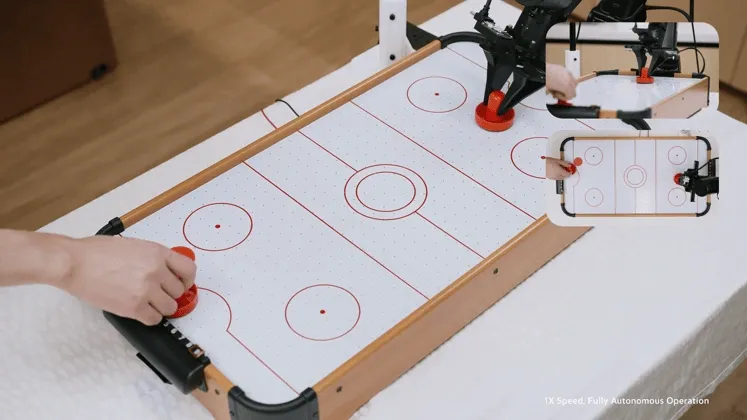
The model addresses the industry challenge of low execution efficiency in embodied world models. LingBot-VA 2.0 delivers a real-time inference speed of 150 Hz on a single GPU. This performance is supported by Enhanced Asynchronous Inference, which allows robots to predict future states while executing actions and correcting decisions using real-world observations.
The model demonstrates strong generalization, requiring as few as 20 demonstrations through in-context learning without parameter updates to adapt to new tasks. LingBot-VA 2.0 is part of a larger full-stack launch, which also introduced LingBot-Depth 2.0, LingBot-Vision, LingBot-VLA 2.0, LingBot-World 2.0, and LingBot-Video.
Key Takeaways
- LingBot-VA 2.0 is the industry’s first embodied-native video-action world model, built from scratch for physical world control.
- The model achieves a real-time inference speed of 150 Hz on a single GPU using an autoregressive architecture.
- It can generalize to new tasks using as few as 20 demonstrations through in-context learning without parameter updates.
TechInsyte's Take
In our view, this native design approach is a significant technical pivot for robotics. By prioritizing causal prediction and execution efficiency over digital visual quality, Robbyant is addressing a fundamental bottleneck in applying AI to physical systems. This signals a move toward more robust, deployable embodied intelligence in industrial settings, rather than purely simulated environments.
Source: Businesswire