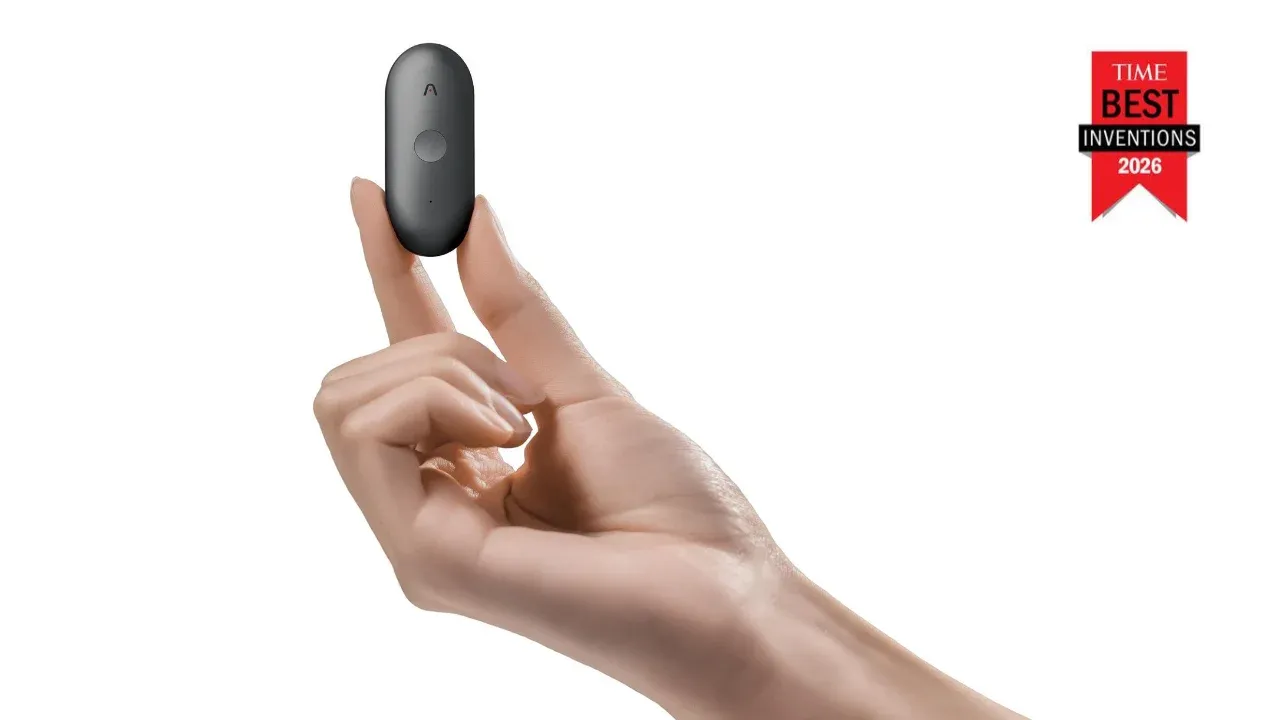
The recognition of wearable AI hardware by major media outlets signals a shift toward ambient intelligence in professional environments. Plaud announced that its NotePin S wearable device has been named one of TIME’s Best Inventions of 2026 within the Consumer Electronics category. This distinction highlights the growing market interest in specialized hardware designed to capture and structure conversational data into actionable intelligence for professional users.
TIME Recognition for Plaud NotePin S
The inclusion of the Plaud NotePin S in TIME’s annual list of 300 groundbreaking inventions underscores the company's move toward ambient AI interfaces. Plaud, a San Francisco-based company, is positioning the NotePin S as a device that allows users to remain present in physical conversations while the hardware captures spoken thoughts. According to CEO and Co-founder Nathan Xu, the company's objective is to make conversational intelligence accessible without pulling users away from their immediate surroundings. This recognition comes as Plaud attempts to expand its product scope from simple AI note-taking toward a more comprehensive "AI work companion" model. The company reports having over 2,500,000 users worldwide since its inception in 2023, suggesting a significant existing user base for this hardware expansion.
Hardware Capabilities and Data Security
The NotePin S is designed as a compact, wearable device intended for continuous daily use. The hardware functions by capturing spoken dialogue and utilizing AI to transform that raw audio into structured notes, summaries, insights, and defined next steps. For enterprise decision-makers, the company is emphasizing a security-first approach to this data collection. Plaud claims compliance with several critical regulatory and security frameworks, including ISO 27001, ISO 27701, GDPR, SOC 2 Type II, HIPAA, and EN 18031. By aligning with these standards, the company is attempting to address the privacy concerns inherent in deploying always-on, wearable recording technology within professional settings. This focus on compliance is central to their strategy of building a "real-world AI interface" for professionals seeking to amplify productivity through structured conversational intelligence.
Key Takeaways
- The Plaud NotePin S was named to TIME’s Best Inventions of 2026 list in the Consumer Electronics category.
- The device uses AI to convert captured conversations into structured summaries, notes, and actionable next steps.
- Plaud maintains compliance with ISO 27001, GDPR, SOC 2 Type II, and HIPAA to support enterprise data security requirements.
TechInsyte's Take
In our view, the recognition of the NotePin S validates the enterprise demand for "invisible" technology that captures unstructured data. While many AI tools focus on screen-based interaction, Plaud is betting on ambient, wearable hardware to bridge the gap between physical meetings and digital workflows. However, the long-term success of this category will depend on whether the company can maintain its rigorous security posture as it scales. If Plaud successfully navigates the privacy complexities of continuous audio capture, they could set a standard for the next generation of professional AI interfaces.
Questions & Answers
How does the NotePin S transform conversational data for professional use?
The device captures spoken thoughts and conversations, then applies AI to structure that information into organized notes, summaries, insights, and specific next steps.
What security frameworks does Plaud utilize to protect captured intelligence?
Plaud states it adheres to several high-level standards, including ISO 27001, ISO 27701, GDPR, SOC 2 Type II, HIPAA, and EN 18031.
What is the strategic direction for Plaud beyond simple note-taking?
The company is working to evolve its technology into a broader "AI work companion" designed to capture, structure, and compound intelligence generated through everyday professional conversations.
What is the current scale of Plaud's user base?
Since 2023, Plaud has reported serving over 2,500,000 users worldwide.
Source: Plaud