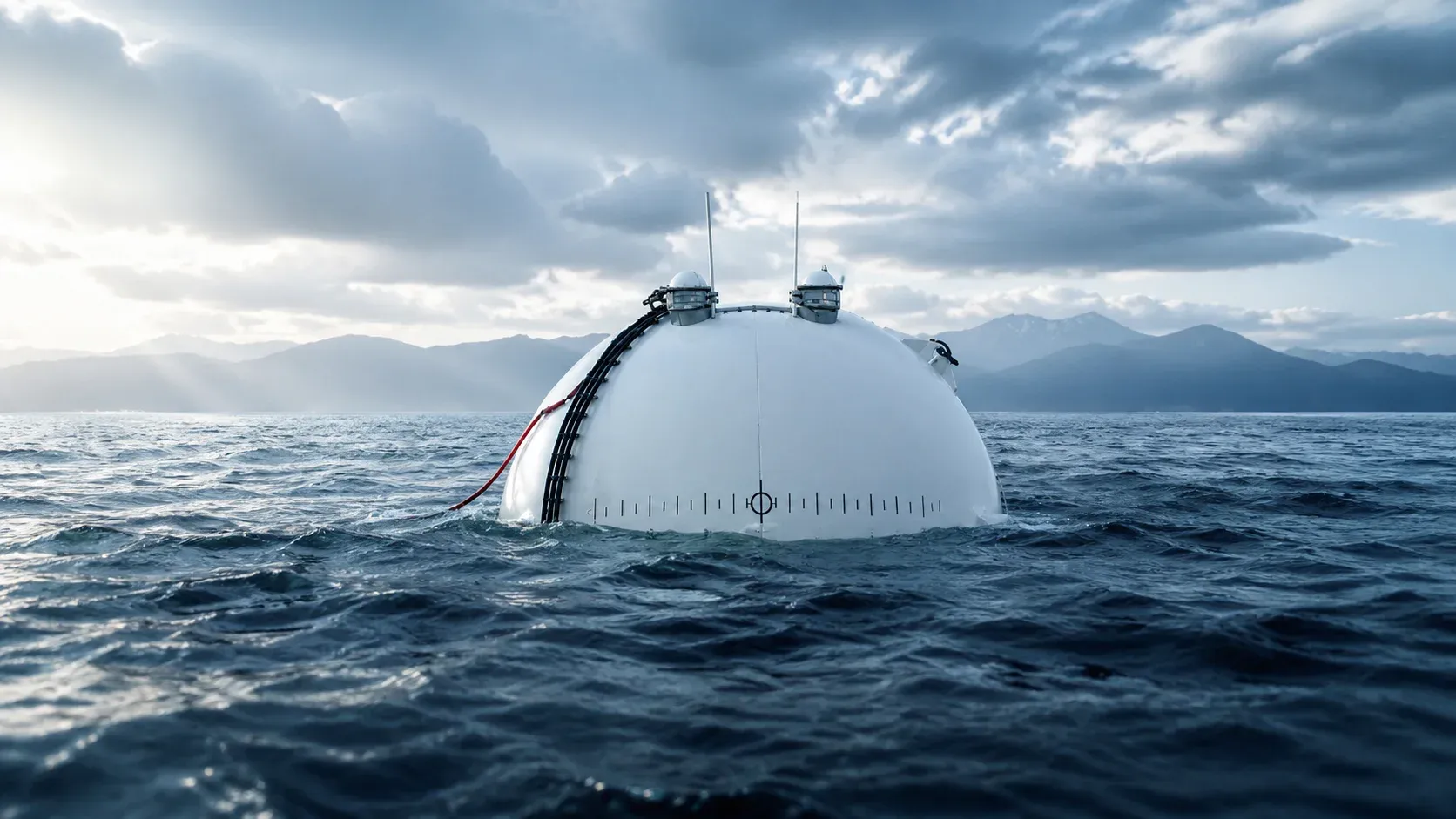
Panthalassa Raises $140 Million to Take AI Computing Into the Open Ocean
Panthalassa has raised $140 million in Series B financing to build and deploy ocean-powered computing systems designed to run AI inference at sea.
The round was led by Peter Thiel and included participation from several new investors, including John Doerr, Marc Benioff’s TIME Ventures, Max Levchin’s SciFi Ventures, Susquehanna Sustainable Investments, Hanwha Asset Management (USA)’s venture fund, Anthony Pratt, Fortescue Ventures, Future Positive, WTI, Nimble Partners, Super Micro Computer, Sozo Ventures, Dylan Field, Planetary VC, Leblon Capital, Resilience Reserve, Portland Seed Fund, and the Intrepid Oregon Fund.
Returning investors included Founders Fund, Gigascale Capital, Lowercarbon Capital, Unless, and WovenEarth.
The funding will support the completion of Panthalassa’s pilot manufacturing facility near Portland, Oregon, and accelerate deployment of its Ocean-3 series of nodes. These autonomous systems are designed to generate power from ocean waves and use that electricity directly onboard to run AI inference workloads.
A New Infrastructure Model for AI Compute
The core idea behind Panthalassa’s platform is different from the traditional data center model.
Instead of building large compute facilities on land and connecting them to power grids, Panthalassa is developing autonomous floating energy systems that operate in the distant ocean. The nodes generate clean electricity from waves, use that power onboard to run AI chips, and send inference tokens back to land through satellite connectivity.
The company says the surrounding ocean also provides free supercooling, which could help address one of the major engineering challenges faced by land-based data centers: keeping high-performance AI chips cool while maintaining reliability and efficiency.
For AI infrastructure buyers and operators, this matters because energy access is becoming one of the biggest constraints on AI growth. More powerful models and larger inference workloads require more compute, more electricity, and more cooling capacity. Panthalassa is positioning the open ocean as an alternative location for both power generation and compute deployment.
Why Panthalassa Is Targeting the Ocean
Panthalassa’s CEO and co-founder Garth Sheldon-Coulson said the company sees the open ocean as one of the few energy sources with tens of terawatts of new capacity potential, alongside solar and nuclear.
According to Sheldon-Coulson, Panthalassa has built a platform that can operate in energy-dense wave regions far from shore and convert that resource into reliable clean power. He said the company is now ready to build factories, deploy fleets, and provide a new sustainable energy source.
The company’s nodes are mass-produced from plate steel in coastal factories and are designed to operate autonomously in distant ocean regions. Rather than sending power back to land, the systems use the energy locally for onboard AI computing.
That design avoids some of the physical and regulatory bottlenecks associated with terrestrial data center expansion, including grid limitations, cooling water demand, permitting timelines, land-use pressure, and strain on local infrastructure.
Ocean-3 Deployments Planned for 2026
Panthalassa has spent the past decade developing the power generation, propulsion, autonomy, and at-sea computing technologies behind its platform.
The company said its Ocean-1, Ocean-2, and Wavehopper prototypes in 2021 and 2024 demonstrated key capabilities at sea.
In 2026, Panthalassa plans to deploy its Ocean-3 pilot node series in the northern Pacific Ocean. These deployments are expected to demonstrate AI inference capabilities and help the company refine its manufacturing process ahead of planned commercial deployments in 2027.
That timeline is important because AI infrastructure demand is growing faster than many power and grid systems can support. If Panthalassa can prove that its floating compute nodes work reliably at sea, it could add a new category to the AI infrastructure market: ocean-powered distributed inference.
Investors See Strategic Infrastructure Potential
Peter Thiel, who led the Series B round, said the future will require more compute than currently imagined and described Panthalassa as opening the “ocean frontier.”
John Doerr also framed the company’s autonomous wave power system as a strategic clean power asset, saying it could benefit workers, communities, and American technological leadership.
The investor group is notable because it includes names from technology, climate, venture capital, manufacturing, and infrastructure. Super Micro Computer’s participation is also relevant given the company’s role in AI server and compute hardware markets.
Why This Matters for AI Infrastructure
Panthalassa is entering the market at a time when AI compute growth is creating pressure across energy, cooling, land, grid, and permitting systems.
Most AI infrastructure discussions focus on larger land-based data centers, new power purchase agreements, nuclear energy, gas generation, or grid upgrades. Panthalassa is proposing another route: move some inference workloads to autonomous systems that generate their own power at sea.
The model may be especially relevant for inference because these workloads can be distributed and connected through satellite data links. The company is not claiming to replace all data centers. Instead, it is trying to create additional compute and energy capacity without requiring new land-based power plants or large data center campuses.
For cloud, AI, and infrastructure leaders, the announcement signals how far the AI buildout is pushing the market to rethink where compute can live and how it can be powered.
Panthalassa’s next test will be execution. The company must move from prototypes and pilot manufacturing into real deployments, reliable ocean operations, and commercial-scale systems. If the Ocean-3 series performs as expected, ocean-powered AI inference could become one of the more unusual but strategically important infrastructure experiments of the AI era.
Key Source / Reference
Official source: Business Wire — Panthalassa Raises $140 Million to Power AI at Sea
FAQ Section
What did Panthalassa announce?
Panthalassa announced $140 million in Series B financing to support manufacturing and deployment of autonomous ocean-powered AI computing systems.
Who led Panthalassa’s Series B funding round?
The Series B round was led by Peter Thiel.
What will Panthalassa use the funding for?
The company will use the funding to complete its pilot manufacturing facility near Portland, Oregon, and accelerate deployment of its Ocean-3 node series.
What are Panthalassa’s Ocean-3 nodes?
Ocean-3 nodes are autonomous floating systems designed to generate electricity from ocean waves and use that power onboard to run AI inference computing.
When does Panthalassa plan to deploy Ocean-3?
Panthalassa plans to deploy its Ocean-3 pilot node series in the northern Pacific Ocean in 2026.
Why is Panthalassa using the ocean for AI computing?
Panthalassa says the ocean offers wave energy for clean power generation and natural cooling for AI chips, while reducing dependence on land-based data centers, power plants, grid capacity, and cooling water.