Mesa Quantum is moving to decouple critical global infrastructure from its reliance on vulnerable satellite-based GPS signals by transitioning from component R&D to full-scale system production. The Boulder-based company announced an oversubscribed $11.8 million funding round led by Playground Global to accelerate the commercialization of chip-scale quantum sensors. This capital injection brings Mesa Quantum’s total venture funding to nearly $16 million, following a $4 million round in 2024 and more than $5 million in non-dilutive awards from U.S. government agencies like SpaceWERX. By miniaturizing precision sensors, the company aims to provide resilient timing and navigation capabilities for environments where traditional wireless signals are easily compromised by jamming, spoofing, or physical blockages.
Scaling Chip-Scale Atomic Clocks for Defense and Industry
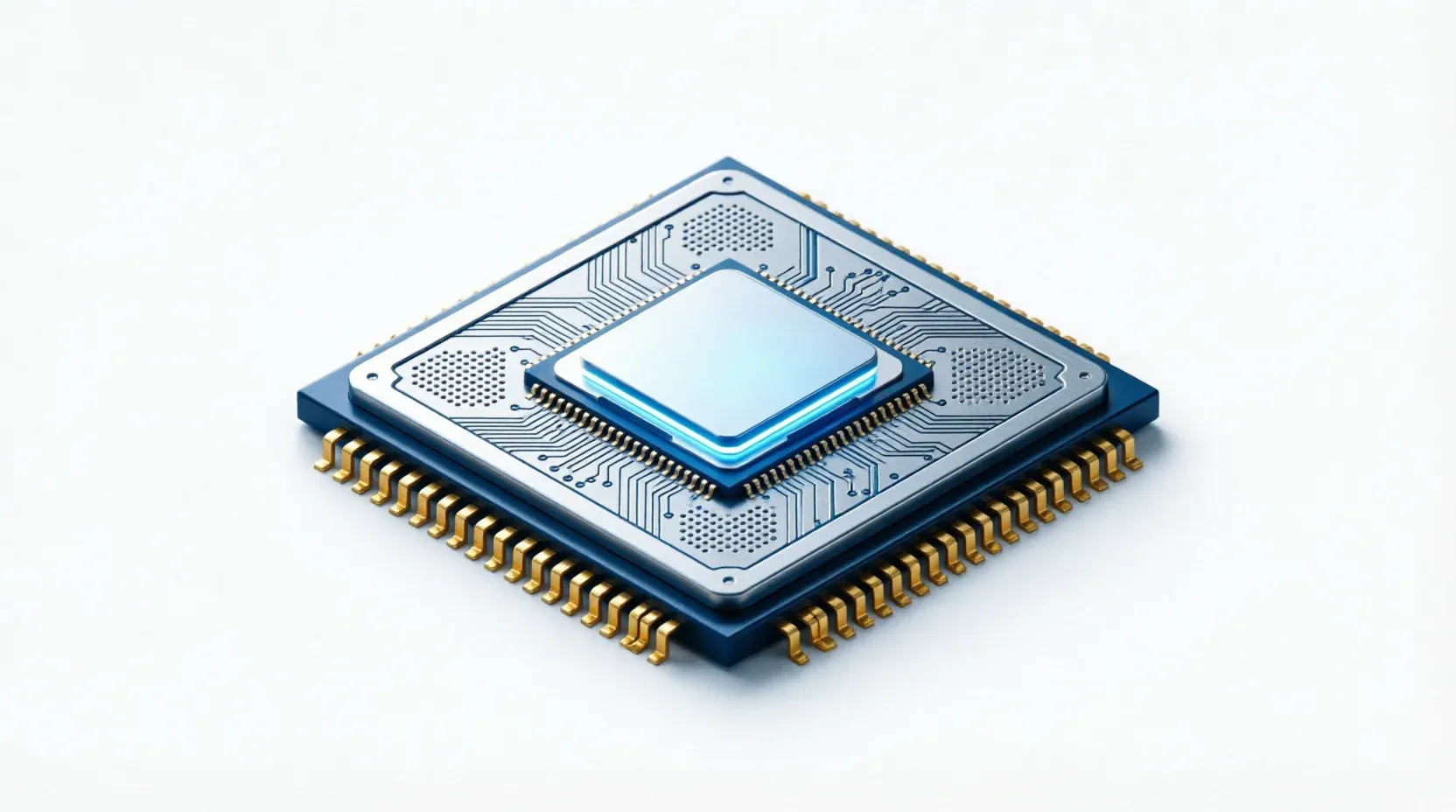
The company is positioning its quantum timing and navigation units as a direct solution to the inherent weaknesses of current GPS-based synchronization. Because satellite signals are weak and susceptible to environmental interference, Mesa Quantum is focusing on developing chip-scale atomic clocks (CSACs) that can be embedded directly into hardware. This shift from component-level development to integrated, ruggedized systems is intended to support high-stakes applications, including U.S. Air Force and Space Force missions. Specifically, the technology aims to enable rapid scaling of CSACs to meet urgent operational requirements and support the Space Force's alternative Position, Navigation, and Timing (PNT) architecture via LEO satellite constellations.
Beyond military use, the company is targeting commercial infrastructure resilience. Mesa Quantum intends to provide timing units that can be integrated into data centers, telecommunications networks, and power grids. These deployments would theoretically allow these systems to maintain operational continuity during adversarial electronic attacks or in "urban canyons" and indoor environments where GPS signals fail. The funding will specifically support final product assembly, system optimization, and the early deployment of field-ready systems to both defense and commercial sectors, moving the technology from a laboratory setting into active, mission-critical environments.
Strengthening Domestic Quantum Manufacturing in New Mexico
A significant portion of the new capital is earmarked for expanding Mesa Quantum’s manufacturing and characterization footprint in New Mexico. This expansion is designed to transition the company from the prototyping phase to scaled production readiness. Central to this strategy is a partnership with Sandia National Laboratories, where the company is working on advanced designs for Vertical-Cavity Surface-Emitting Lasers (VCSELs) and Photonic Integrated Circuits (PICs). By leveraging Sandia’s expertise, Mesa Quantum aims to optimize these components for both high performance and high-volume manufacturability.
The company is also establishing domestic characterization operations at the Center for Integrated Nanotechnologies (CINT). This move is intended to create a streamlined model for transferring advanced technology from national laboratories to commercial, deployed capabilities used by the U.S. Government. By building this infrastructure, Mesa Quantum is attempting to secure a domestic supply chain for quantum-optimized components, such as accelerometers, magnetometers, and gyroscopes. This focus on localized, high-volume characterization and production is a strategic attempt to address the "size, weight, power, and cost" limitations that have historically prevented precision quantum sensors from being deployed at a massive, industrial scale.
Key Takeaways
- Mesa Quantum raised $11.8 million in an oversubscribed round led by Playground Global, bringing total venture funding to nearly $16 million.
- The company is developing chip-scale atomic clocks (CSACs) to provide resilient timing and navigation in GPS-denied environments, such as contested airspace or underwater.
- Operations are expanding in New Mexico through a partnership with Sandia National Laboratories to scale the production of VCSELs and Photonic Integrated Circuits.
TechInsyte's Take
In our view, Mesa Quantum’s pivot from R&D to scaled manufacturing signals a critical shift in the quantum sector: the move from proving scientific viability to solving the "integration gap." For enterprise IT and defense leaders, the value proposition isn't just the precision of the sensor, but its ability to exist at the chip level within existing hardware footprints. By targeting the vulnerabilities of GPS—specifically in data center synchronization and autonomous drone operations—Mesa Quantum is addressing a massive, unaddressed risk in digital and physical infrastructure resilience. If they can successfully bridge the gap between national lab breakthroughs and high-volume, ruggedized commercial production, they will move quantum sensing from a niche scientific tool to a foundational component of the global telecommunications and defense supply chain.
Questions & Answers
How does Mesa Quantum’s technology address the specific vulnerabilities of GPS?
Mesa Quantum is developing chip-scale quantum sensors, including atomic clocks, that provide highly stable frequency references and timing. This allows systems to maintain precision in environments where GPS signals are weak, jammed, spoofed, or blocked by physical obstacles like buildings or underwater terrain.
What specific military applications is the company targeting with this funding?
The company is targeting several high-priority areas, including providing single-digit picosecond stability for drone swarms in contested airspace, supporting the Space Force's alternative PNT architecture for LEO satellites, and enabling enhanced M-Code GPS receivers to maintain accuracy during electronic attacks.
What role does the New Mexico expansion play in the company's commercialization strategy?
The expansion in New Mexico is designed to transition Mesa Quantum from prototyping to scaled characterization and production. By partnering with Sandia National Laboratories and utilizing the Center for Integrated Nanotechnologies, the company aims to build a domestic supply chain for quantum-optimized components like VCSELs and Photonic Integrated Circuits.
Which commercial sectors are expected to benefit from these quantum timing units?
Mesa Quantum is targeting critical infrastructure sectors, specifically data centers, telecommunications networks, and power grids, to ensure these systems can maintain precise time synchronization even during adversarial attacks or environmental signal blockages.
Source: Mesa Quantum