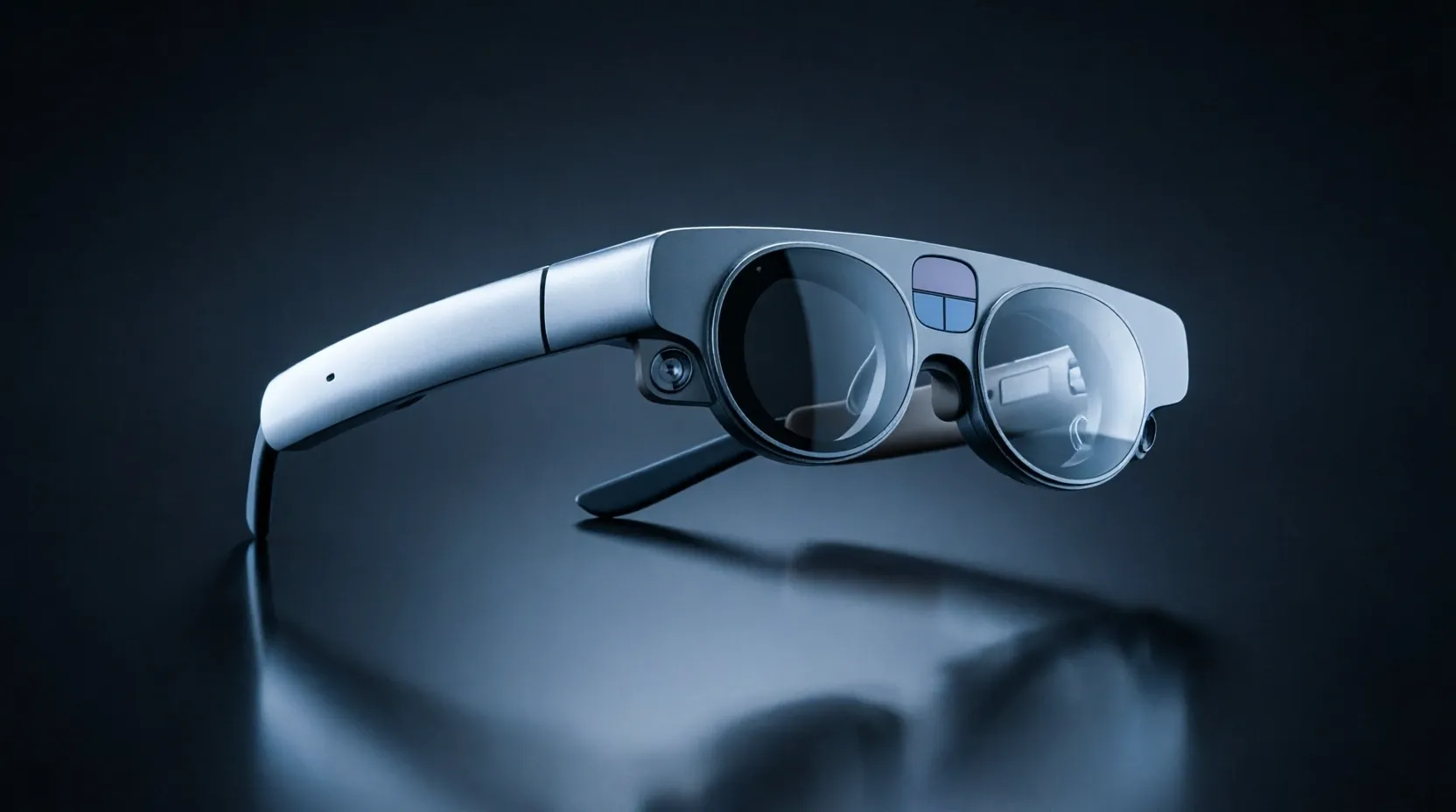
Magic Leap, a pioneer in augmented reality optics, has announced a strategic pivot to accelerate the development of AI display glasses. The company is shifting its focus from building first-party devices to becoming an essential AR ecosystems partner, providing prominent waveguide technology and device integration expertise to the broader technology industry. This shift addresses the market's growing need for high-performance, scalable AR components.
Magic Leap's Shift to Waveguide Supply
Magic Leap is positioning its decade-plus of deep AR expertise to help partners bring AI display glasses to consumers rapidly. The company’s manufacturing process is designed for growth and cost-efficiency, allowing partners to bypass years of research and development. Scott Carden, SVP of display engineering and manufacturing at Magic Leap, stated that the company is solving the toughest challenges of scaling waveguide production, from performance to full-device integration. This expertise is intended to help partners reach the market faster with AI-enabled wearables.
Structural Advantages of Magic Leap's Manufacturing
The company’s waveguide manufacturing process offers a structural advantage for Original Equipment Manufacturers (OEMs) due to its focus on repeatability and volume. Magic Leap utilizes a proprietary Jet and Flash Imprint Lithography (J-FIL) process to ensure unit-to-unit consistency, increase yield, and reduce material waste. Furthermore, its surface-relief grating diffractive waveguide architecture requires significantly fewer process steps than competitors. This speed facilitates shorter manufacturing cycles and quicker design iteration, moving prototypes toward volume-ready production without compromising optical quality.
Waveguide Performance for AI Display Glasses
Magic Leap’s diffractive waveguides are designed to support the specific requirements of AI display glasses in a thin, lightweight format. The technology is engineered to accommodate increasingly larger field-of-view ranges and higher resolution for a clearer AR experience. Kevin Curtis, SVP of advanced optics, noted that waveguide performance is what separates consumer-ready AR from expensive demonstrations. The technology also supports integration with most commercially available light engine technology and features a larger eyebox for broader user accommodation.
Key Takeaways
- Magic Leap is transitioning to a partner-first model, supplying prominent waveguide technology for AI display glasses.
- The company utilizes a proprietary J-FIL manufacturing process to ensure unit-to-unit consistency and reduce material waste.
- Magic Leap’s waveguide technology supports larger field-of-view ranges and higher resolution for AI display applications.
TechInsyte's Take
In our view, Magic Leap’s pivot signals a maturation of the AR hardware market, moving from niche device development to component standardization. By focusing on the waveguide—the most challenging optical element—Magic Leap is addressing a critical bottleneck for AI wearable adoption. This strategy positions the company not as a device manufacturer, but as an indispensable infrastructure provider for the next wave of visual AI content delivery. For B2B buyers, this means access to a proven, scalable optical solution that de-risks their own hardware development timelines.
Source: Businesswire