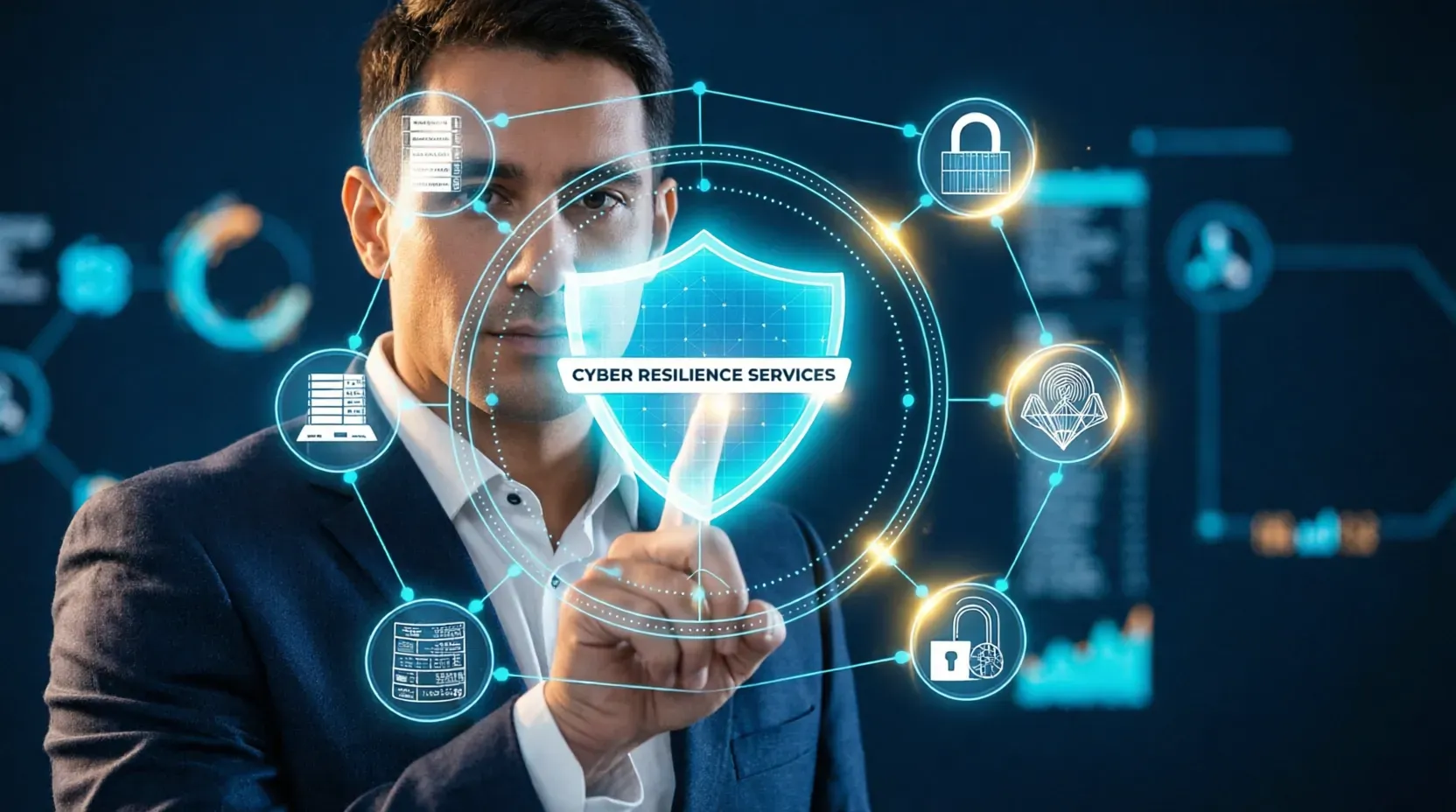
Lenovo announced a major expansion of its Security Services portfolio, unveiling a unified cyber‑resilience framework and two new offerings designed to simplify security operations for enterprises of all sizes. The announcement arrives against a backdrop in which 90 % of IT leaders acknowledge gaps in their ability to defend against AI‑driven threats, and many organizations struggle with fragmented accountability across multiple vendors and tools. By consolidating hardware trust, multi‑layered protection, AI‑enabled operations, and managed services under a single point of responsibility, Lenovo aims to give security leaders the confidence that people, devices, and data remain protected while reducing the operational overhead that typically accompanies complex, siloed security stacks.
Lenovo Expands Security Services with a Unified Resilience Framework
Lenovo’s refreshed portfolio bundles hardware trust, multi‑layered protection, and AI‑enabled operations into a single operational model that the company says can cut system downtime by up to 50 % and lower remediation costs by up to 40 %. The framework brings together devices, security technologies, expert services, and ecosystem partners—such as Absolute, Cisco, Google, Microsoft, SentinelOne, and Veeam—under one accountable relationship.
Rakshit Ghura, Vice President and General Manager of Digital Workplace Solutions at Lenovo, emphasized that “security leaders don’t need more tools. They need greater confidence that their people, devices, and data remain protected, and clear accountability when issues arise.” He added that, in many incidents, organizations are forced to coordinate across multiple vendors, platforms, and support teams, a process that hampers rapid response. By unifying these components, Lenovo’s framework seeks to eliminate that fragmentation.
The integrated model covers six core pillars:
- Identity and Access Management – ensuring only authorized users can reach critical resources.
- Data Protection – encrypting data at rest and in motion and enforcing policy‑based controls.
- Extended Detection and Response (XDR) – providing continuous threat hunting and automated response across endpoints, networks, and cloud workloads.
- Visibility and Risk Management – delivering a consolidated view of security posture and risk exposure.
- Security for AI – safeguarding AI workloads and models from manipulation or data poisoning.
- AI‑enabled Security Operations Center (SOC) – a 24×7×365 monitoring hub that coordinates response across the integrated stack, reducing the need for customers to manage multiple vendor relationships.
By aligning these capabilities, Lenovo claims customers can maintain business continuity, accelerate recovery, and better leverage existing security investments. The framework also supports a “single point of accountability” model, meaning that when a cyber incident occurs, one trusted relationship—Lenovo—guides the organization through detection, containment, and remediation.
Managed End‑to‑End Resilience Offering with Absolute
As part of the portfolio expansion, Lenovo is launching Security Services with Absolute, a fully managed end‑to‑end resilience service built on Absolute’s firmware‑level persistence technology. The service automates the recovery of essential security controls across distributed workforces, reducing the need for manual intervention and easing the burden on internal IT teams.
Key features of the offering include:
- Automatic control recovery when a device is disrupted, ensuring that critical protections such as encryption, endpoint detection, and policy enforcement are reinstated without delay.
- Continuous monitoring by Lenovo’s global 24×7×365 SOC, where security specialists watch for anomalous activity, triage alerts, and coordinate response actions.
- Expert oversight that combines Lenovo’s security expertise with Absolute’s deep device‑level visibility, delivering a proactive stance against emerging threats.
Lenovo states that this managed service helps organizations maintain consistent protection across complete environments while reducing operational overhead. By handling firmware‑level resilience, managed operations, and expert security oversight, the service strengthens end‑to‑end resiliency and allows internal teams to focus on strategic initiatives rather than routine remediation.
ThinkShield TraceLock Extends Visibility to Offline Devices
Lenovo is also introducing ThinkShield TraceLock, powered by Absolute Security, to address blind spots that arise when devices are powered off or disconnected from the network. Traditional endpoint security relies on an active operating system or network connection; when a device is offline, it can become an operational blind spot. TraceLock leverages built‑in cellular connectivity to let IT teams remotely locate, wake, and wipe lost or stolen hardware, even without an active OS or network link.
The solution is especially valuable for highly regulated sectors—healthcare, financial services, government, and the public sector—where maintaining control over sensitive data is a compliance imperative. TraceLock will be available beginning July 1 on select ThinkPad models, including the ThinkPad X1 Carbon Gen 14, ThinkPad X1 2‑in‑1 Gen 11, ThinkPad T14s Gen 7 Intel, and ThinkPad T16 Gen 5 Intel. By extending visibility and control beyond traditional security boundaries, the feature helps organizations protect data, meet regulatory requirements, and reduce risk when hardware is lost or compromised.
Key Takeaways
- 90 % of IT leaders say they have gaps in defending against AI‑driven threats, according to recent research.
- Lenovo’s new cyber‑resilience framework promises up to 50 % reduction in system downtime and up to 40 % lower remediation costs.
- ThinkShield TraceLock, launching July 1, adds remote locate, wake, and wipe capabilities for offline ThinkPad devices.
TechInsyte's Take
Lenovo’s consolidation of hardware, software, and managed services into a single accountability model directly addresses the fragmentation many enterprises face today. While the promised downtime and cost reductions are attractive, the actual impact will depend on how quickly organizations adopt the new services and integrate them with existing security stacks. CIOs should monitor early customer deployments for real‑world performance data and evaluate whether the unified SOC model aligns with their internal governance structures.
Source: Businesswire