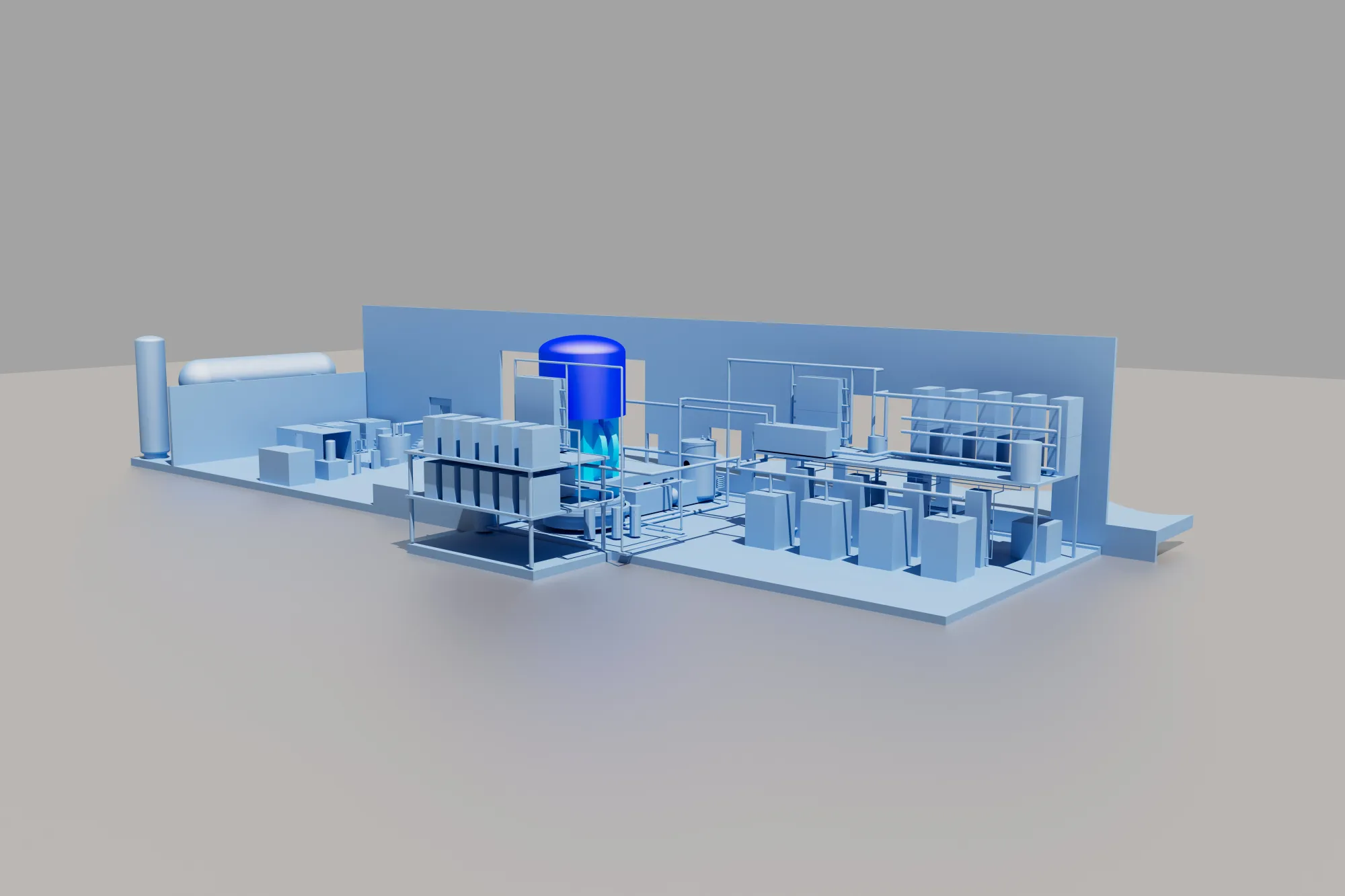
General Atomics announced that it has been awarded a $20 million California Competes Tax Credit to fund the design and construction of a Blanket Component Test Facility (BCTF) in San Diego. The state‑backed credit is intended to accelerate the development and testing of full‑scale fusion blanket components—large structures that line the interior of a fusion reactor, capture the high‑energy neutrons produced by the fusion reaction, convert that energy into electricity, and generate tritium, the fuel required to sustain the reaction. By securing this financing, General Atomics positions San Diego as a national hub for the next phase of fusion research, moving the technology from laboratory experiments toward commercial‑grade power plants. The award also underscores California’s strategic commitment to building a domestic fusion supply chain, creating high‑skill jobs, and fostering public‑private collaborations that could ultimately deliver carbon‑free electricity at scale.
California Competes Tax Credit Award to General Atomics
The California Competes Tax Credit, administered by the Governor’s Office of Business and Economic Development (GO‑Biz) and approved by the California Competes Tax Credit Committee, provides a statewide income‑tax credit to high‑value employers that create full‑time, well‑paid jobs and drive significant investment in the state. Under this program, General Atomics will receive $20 million to support its proposal for a state‑of‑the‑art BCTF in San Diego.
Anantha Krishnan, senior vice president of the General Atomics Energy Group, said the award “will aid General Atomics’ continued investment in the research and capabilities needed to move fusion closer to realization, while strengthening our clean energy future.” The credit will fund the design, engineering, and construction of a facility dedicated to testing full‑scale fusion blanket components—critical systems that line the interior of a fusion vessel, capture neutron‑generated energy, and produce tritium, the fuel needed to sustain fusion reactions.
The tax credit itself is a broader economic‑development tool. It is designed to help businesses grow in California, create quality full‑time jobs, and provide good wages and benefits. GO‑Biz senior advisor Dee Dee Myers highlighted that the program “doubles down on the ingenuity and innovation that will define the future,” emphasizing California’s intent to remain a global leader in transformative technologies such as fusion.
Collaboration Framework and Regional Fusion Ecosystem
General Atomics’ BCTF proposal is embedded in a robust public‑private partnership. The company is working closely with the U.S. Department of Energy (DOE), which has already signaled interest in supporting concept designs for the facility. Idaho National Laboratory, a key DOE laboratory for advanced nuclear research, is a collaborative partner, bringing expertise in materials testing and neutron physics. The University of California, San Diego (UC San Diego) contributes academic research capabilities, while other industry and academic collaborators add depth in precision engineering, high‑field magnets, and digital engineering.
GA also operates the DIII‑D National Fusion Facility in San Diego, the nation’s largest magnetic‑fusion user facility. DIII‑D serves as a testbed for plasma physics experiments and provides a ready‑made user community that can transition to blanket testing once the BCTF is operational. The region’s ecosystem is further enriched by the Fusion Data Science and Digital Engineering Center, major programs at UC San Diego and San Diego State University, and a growing network of private‑sector innovators focused on advanced manufacturing and materials science.
State legislation has reinforced this ecosystem. Senate Bill 80 created the California Fusion Research and Development Innovation Initiative, the first state program dedicated to accelerating fusion technology development and commercialization. Senate Bill 86 expanded the Sales and Use Tax Exclusion Program to include fusion‑related technologies, reducing the cost burden for companies investing in equipment and components. A pending Senate Bill 925 would establish a comprehensive state strategic plan and regulatory roadmap for fusion, providing long‑term policy certainty. Local efforts by the City of San Diego and the San Diego Regional Economic Development Corporation continue to promote the region as a center for fusion innovation and advanced manufacturing, attracting talent pipelines in high‑energy physics, materials science, and precision engineering.
Potential Implications for Enterprise Buyers
The BCTF will serve as a focal point for scientists and engineers from both the public and private sectors to validate blanket designs, assess material performance under intense neutron flux, and develop ancillary technologies such as tritium‑breeding modules and heat‑exchange systems. For enterprises evaluating long‑term clean‑energy strategies, the facility could become a trusted source of validated component data, reducing technical risk and accelerating the de‑risking of future fusion‑based power projects. Access to real‑world testing data will be especially valuable for companies that plan to integrate fusion‑derived electricity into existing grids or that are developing downstream products such as high‑temperature superconductors, advanced alloys, or digital twins for fusion plant operation.
The tax credit also signals strong state support for high‑skill job creation. By attracting engineers, physicists, and materials scientists, the BCTF can help build a regional talent pool that enterprises can tap for recruitment, joint R&D, or contract manufacturing. While General Atomics has not disclosed a definitive timeline for construction or operational start‑up, the partnership with DOE and academic institutions suggests a phased approach aligned with federal fusion research milestones, such as the U.S. Department of Energy’s Fusion Energy Sciences roadmap. Enterprises interested in early engagement can monitor progress through GA’s energy‑group communications, GO‑Biz updates, and public briefings from DOE and UC San Diego.
Key Takeaways
- General Atomics received a $20 million California Competes Tax Credit to fund a Blanket Component Test Facility in San Diego.
- The BCTF will test full‑scale fusion blanket components, addressing a key engineering challenge for commercial fusion power plants.
- The project is supported by a public‑private partnership that includes the U.S. Department of Energy, Idaho National Laboratory, and UC San Diego, and it builds on California’s recent fusion‑focused legislation.
TechInsyte's Take
The tax credit underscores California’s commitment to nurturing the fusion supply chain, offering enterprises a clearer pathway to access validated blanket technology. However, the BCTF’s schedule and the pace of commercial‑grade fusion deployment remain uncertain, so CIOs and CTOs should track GA’s milestones and related state policy developments before committing to downstream fusion projects.
Source: Businesswire