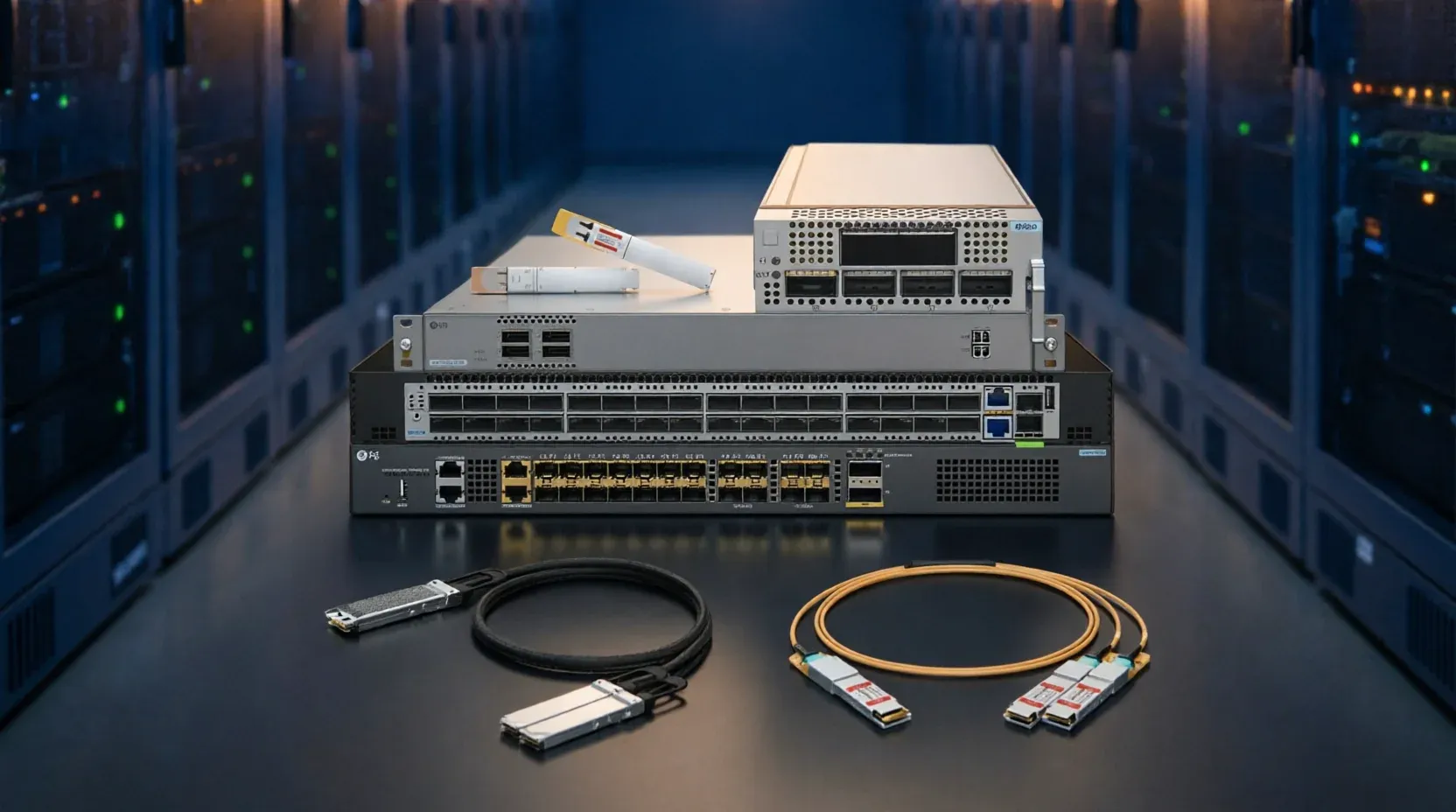
The rapid expansion of GPU-intensive AI clusters is forcing a shift from fragmented hardware procurement toward unified, end-to-end physical infrastructure. FS is addressing this demand by launching a fully integrated physical-layer portfolio designed for AI data centers, enterprise environments, and large-scale campus networks. This new ecosystem converges high-speed optical connectivity, structured cabling, and intelligent power distribution to manage the increasing bandwidth and rack-level power density requirements of modern digital infrastructure.
Addressing High-Density AI Cluster Demands
As AI workloads drive unprecedented requirements for connection density, FS is positioning its portfolio to support both current deployments and future migrations. The company is offering 400G and 800G optical transceivers, including OSFP and QSFP-DD formats, alongside Direct Attach Cables (DACs), Active Optical Cables (AOCs), and ultra-low-loss MTP®/MPO interconnects. To manage the massive energy requirements of these clusters, the portfolio integrates three-phase intelligent PDUs and modular UPS systems. These components are intended to support redundant power architectures while providing real-time visibility into energy consumption and operating conditions, a critical requirement for maintaining resilience in high-density, power-constrained AI environments.
Modular Cabling for Enterprise and Campus Scaling
Beyond the data center core, FS is targeting the distributed nature of modern enterprise networks through modular cabling systems. For data center cores, the company is deploying the FHD® high-density fiber enclosure series, pre-terminated trunk cabling, and shielded Cat6a/Cat8 copper systems to facilitate organized routing and rapid capacity expansion. To bridge the gap between the backbone and the edge, the portfolio extends to high-fiber-count outdoor cables and indoor 10G twisted-pair and PoE cabling. This approach aims to standardize deployments across diverse facilities, ranging from multi-story buildings to large-scale campuses, by providing a consistent infrastructure framework that simplifies both initial deployment and long-term maintenance.
Key Takeaways
- FS introduced a unified physical-layer portfolio covering optical connectivity, structured cabling, and intelligent power distribution.
- The AI-focused offering includes 400G and 800G optical transceivers (OSFP and QSFP-DD) and modular UPS systems.
- Enterprise solutions feature the FHD® high-density fiber enclosure series and shielded Cat6a/Cat8 copper systems for modular scaling.
TechInsyte's Take
In our view, FS is responding to a critical bottleneck in AI deployment: the physical layer. While much industry focus remains on chip performance, the underlying power and connectivity density often dictate actual scaling limits. By bundling intelligent PDUs with high-speed 800G optics and modular fiber enclosures, FS is attempting to move the conversation from individual component procurement to holistic infrastructure management. This signals that for AI-driven enterprises, managing power visibility and cabling complexity is becoming as vital as the compute layer itself.
Questions & Answers
How does this portfolio address the power density challenges of AI clusters?
FS is integrating three-phase intelligent PDUs and modular UPS systems into its portfolio, which are designed to support redundant power architectures and provide real-time visibility into energy consumption and operating conditions.
What specific high-speed connectivity options are available for 800G deployments?
The portfolio includes 400G and 800G optical transceivers in OSFP and QSFP-DD formats, as well as Direct Attach Cables (DACs), Active Optical Cables (AOCs), and ultra-low-loss MTP®/MPO interconnects.
Can this infrastructure support large-scale campus environments beyond the data center?
Yes, the portfolio includes high-fiber-count outdoor cables, indoor 10G twisted-pair cabling, and PoE cabling to extend connectivity from the data center backbone to the campus edge.
What is the strategic goal of the FHD® high-density fiber enclosure series?
The FHD® series is part of a modular architecture intended to support organized cable routing and allow for rapid, on-demand capacity expansion within enterprise data center cores.
Source: Businesswire