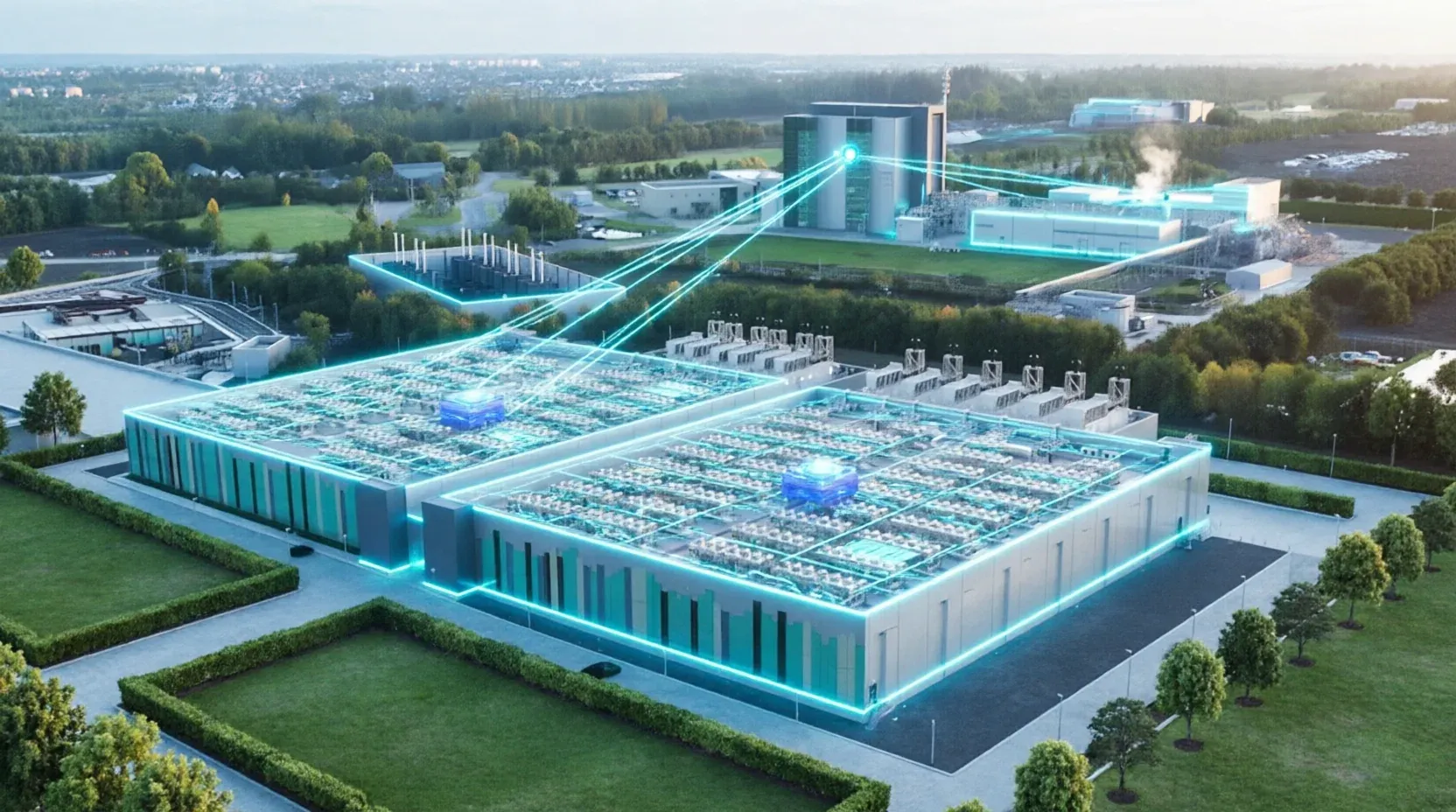
EdgeConneX is positioning itself at the center of the tropical data center evolution by joining the Sustainable Tropical Data Centre Testbed Phase 2.0 (STDCT 2.0) Consortium as a top-tier anchor partner. This multi-year commitment aims to address the specific cooling and power challenges inherent in high-humidity, high-heat environments like Singapore, which serves as the company's Asia Pacific regional headquarters. By funding a shared infrastructure pool and contributing its high-density "Ingenuity" solution, EdgeConneX is attempting to bridge the gap between academic research and commercial-scale deployment of AI-ready infrastructure. The move signals a strategic effort to validate next-generation technologies, such as advanced liquid cooling and grid-responsive operations, within a live, real-world testing framework hosted at the National University of Singapore (NUS).
EdgeConneX Funding and STDCT 2.0 Research Goals
The partnership establishes EdgeConneX as a primary contributor to a technology- and operator-agnostic co-innovation program. The company is committing to a multi-year support structure that includes direct funding toward a shared infrastructure pool managed by the STDCT 2.0 program team. Beyond capital, EdgeConneX intends to deploy its global data center expertise to participate in collaborative R&D, technology integration, and field validation. This involvement is designed to help evaluate and de-risk sustainable solutions specifically for tropical climates, where conventional cooling systems often face operational limits due to ambient heat and humidity.
The shared research infrastructure being developed under this consortium is technically sophisticated, featuring modular data-center test environments and advanced liquid-cooling and heat-rejection systems. A central component of the initiative is the development of an AI-native digital twin. This digital twin is intended for system modeling, optimization, predictive operations, and lifecycle performance assessment. By utilizing these tools, the consortium aims to translate physics-informed design and digital twin technologies into practical, scalable solutions. EdgeConneX is also using this platform to support "AI for Science" initiatives and to foster engineering talent through real industrial use cases and learning programs, effectively linking academic innovation with the immediate requirements of hyperscale and AI workloads.
Scaling AI-Ready Infrastructure in Tropical Climates
As AI workloads drive a significant increase in rack densities, the industry is facing a fundamental shift in how data centers are designed, powered, and cooled. The STDCT 2.0 initiative, hosted at the College of Design and Engineering (CDE) within the National University of Singapore, focuses on these next-generation, AI-ready requirements. The program is specifically targeting the ability to power ultra-high-density racks sustainably through technologies like advanced liquid cooling and grid-responsive operations. This is critical because the surge in compute demand is placing intensifying strain on digital infrastructure, particularly in tropical regions where environmental factors push traditional systems to their limits.
EdgeConneX is leveraging this testbed to validate its own high-density solutions, such as its Ingenuity platform, against the rigorous demands of the tropical environment. The company has noted that its existing Asia Pacific facilities already utilize advanced non-evaporative cooling systems to improve efficiency for hyperscale and AI customers while preserving community water resources. Through the STDCT 2.0 consortium, EdgeConneX seeks to refine these methods. The program, led by NUS, orchestrates innovations in cooling, power, and heat rejection, providing a multi-vendor environment where technologies can be tested at a commercial data-center scale before widespread deployment. This collaborative approach aims to future-proof the sector by ensuring that the infrastructure supporting the next wave of AI can operate reliably in challenging climates.
Key Takeaways
- EdgeConneX has joined the Sustainable Tropical Data Centre Testbed Phase 2.0 (STDCT 2.0) Consortium as a top-tier anchor partner, providing multi-year funding and expertise.
- The STDCT 2.0 initiative utilizes an AI-native digital twin and advanced liquid-cooling systems to test and validate next-generation, high-density data center technologies.
- The program is hosted at the National University of Singapore (NUS) and focuses on solving cooling and power challenges specific to tropical, high-humidity environments.
TechInsyte's Take
In our view, EdgeConneX’s move to anchor the STDCT 2.0 consortium is a calculated attempt to commoditize the "tropical cooling" problem. As AI-driven density requirements move from theoretical models to massive, real-world deployments, the ability to manage heat in high-humidity regions becomes a primary competitive differentiator for infrastructure providers. By embedding itself in a research-heavy, multi-vendor environment at NUS, EdgeConneX is not just supporting academia; it is actively participating in the standardization of the very liquid-cooling and digital-twin technologies that will define the next decade of edge and hyperscale deployments. This strategy allows the company to de-risk its high-density "Ingenuity" solutions in a controlled setting before they are deployed in mission-critical client environments. For enterprise leaders, this signals that the future of sustainable AI infrastructure will likely rely on a tighter integration between physics-informed design and real-time, AI-driven operational modeling.
Questions & Answers
How does the STDCT 2.0 program address the specific challenges of tropical data center environments?
The program focuses on testing and validating next-generation technologies, such as advanced liquid cooling and grid-responsive operations, which are designed to manage the high heat and humidity levels that push conventional cooling systems to their limits in tropical regions.
What specific technologies will be validated within the STDCT 2.0 shared infrastructure?
The shared infrastructure includes modular data-center test environments, advanced liquid-cooling and heat-rejection systems, high-resolution instrumentation, telemetry platforms, and an AI-native digital twin used for system modeling and predictive operations.
What is the strategic role of EdgeConneX within this consortium?
As a top-tier anchor partner, EdgeConneX provides multi-year funding to a shared infrastructure pool, contributes its "Ingenuity" high-density solution, and participates in collaborative R&D and field validation to help de-risk sustainable solutions at a commercial scale.
Why is the development of an AI-native digital twin significant for this initiative?
The AI-native digital twin is intended to enable advanced system modeling, optimization, predictive operations, and lifecycle performance assessment, allowing operators to simulate and refine how data centers respond to changing conditions and high-density AI workloads.
Source: Businesswire