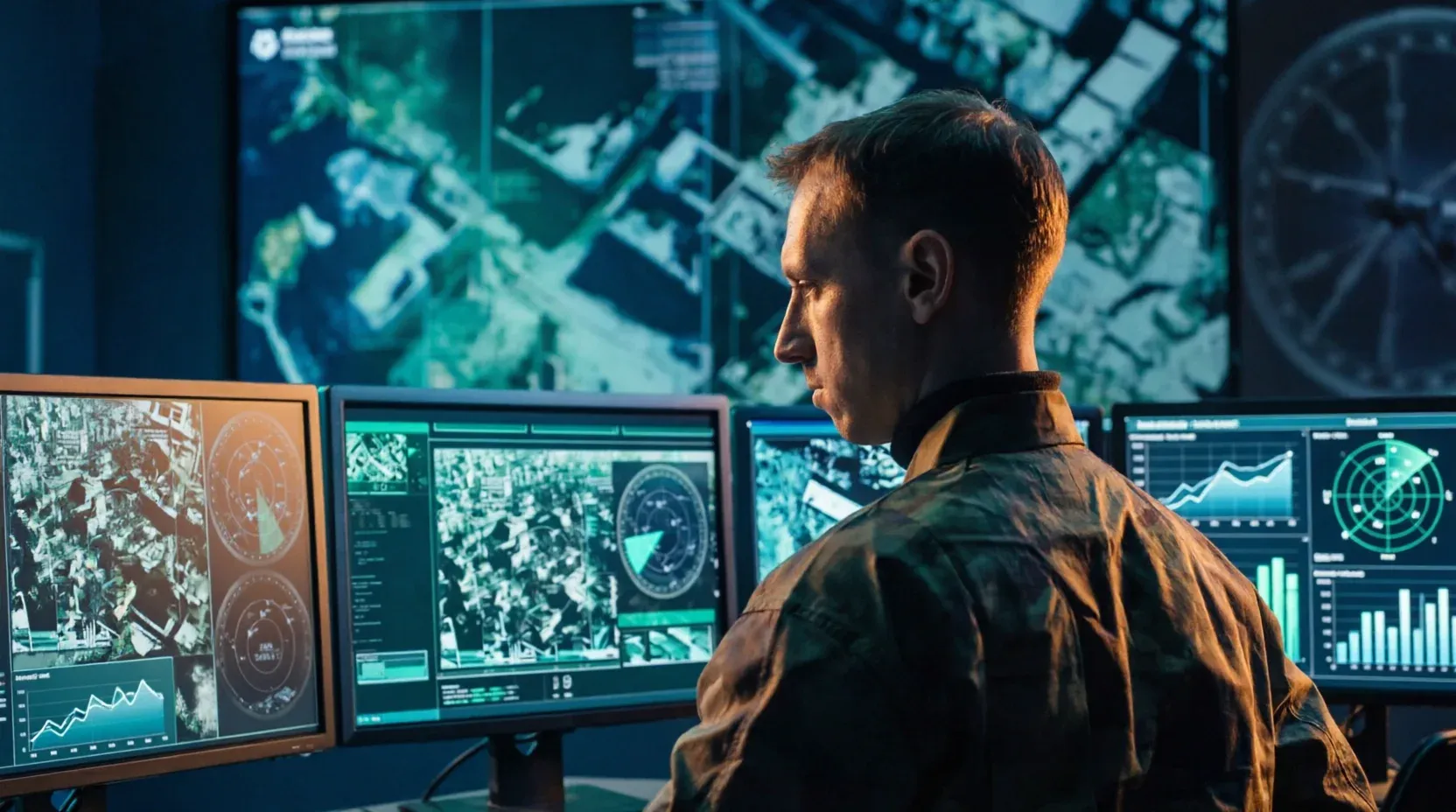
Dataminr is pivoting from traditional real-time alerting toward a model of "Autonomous Real-Time Intelligence" to capture a larger share of the high-stakes defense and government intelligence market. By launching its First Alert Advanced platform alongside a massive $318 million contract with the U.S. Department of War (DOW), the company is attempting to move beyond simple event detection into the realm of automated reasoning and predictive analysis. This strategic shift aims to provide decision-makers with not just the "what" of a breaking event, but the "so what" through agentic AI. The DOW agreement, which spans the Air Force, Army, Navy, Marine Corps, Space Force, and all unified combatant commands, establishes Dataminr as a primary intelligence provider for the U.S. military through 2031.
Dataminr Secures $318M DOW Intelligence Contract
The U.S. Department of War has awarded Dataminr a five-year, $318 million contract to provide situational awareness, force protection, and indications and warnings regarding global events. This agreement is significant in its scope, as it encompasses the entire DOW enterprise, including all major military branches and operational commands. The contract positions the First Alert program as a central component of the military's intelligence-gathering infrastructure, utilizing publicly available information to feed mission-critical workflows.
This massive capital injection arrives as Dataminr seeks to solidify its standing within the global defense sector, where it already serves the militaries of 18 nations, including 15 NATO members. The company is leveraging this contract to scale its presence across both international and domestic government markets. Beyond the DOW, Dataminr maintains a footprint in over 100 U.S. government organizations, including the Department of Homeland Security, the State Department, and the Department of Justice. By securing this long-term commitment from the DOW, Dataminr is effectively locking in its role as a foundational intelligence provider for the next half-decade, providing a stable revenue stream to fund its transition into more advanced, agentic AI-driven capabilities.
First Alert Advanced and Agentic AI Capabilities
With the launch of First Alert Advanced, Dataminr is introducing "agentic" technology designed to automate the corroboration and contextualization of breaking news. Rather than relying on a single large language model (LLM), the company is deploying a constellation of more than 60 specialized, purpose-built LLMs. These models are trained on Dataminr’s proprietary 10-year archive of historical event data, a move the company claims helps mitigate the hallucinations and latency issues often associated with massive, general-purpose frontier models.
The new platform introduces several autonomous features, including "Agentic Corroboration," where a fleet of Intel Agents scans the public information landscape to verify unfolding events. The platform also features "ReGenAI Tailored Live Briefs," which are intended to describe an event's evolution and its specific impact on an organization in real time. Additionally, "Agentic Context" uses the company's decade-long event archive to provide historical significance to new data, while "Tactical Predictive Intelligence" attempts to forecast how an event might evolve over several hours. To integrate these insights into existing defense workflows, Dataminr has released a native application for the Palantir Foundry Marketplace, allowing users to synthesize autonomous intelligence with internal government data layers.
Key Takeaways
- Dataminr secured a five-year, $318 million contract with the U.S. Department of War to provide situational awareness and force protection through 2031.
- The new First Alert Advanced platform utilizes over 60 specialized, purpose-built LLMs trained on a proprietary 10-year historical event archive.
- The platform introduces agentic capabilities, including autonomous corroboration, real-time live briefs, and tactical predictive intelligence.
TechInsyte's Take
In our view, Dataminr's move to replace general-purpose frontier models with a "constellation" of 60+ specialized LLMs is a sophisticated response to the specific reliability requirements of the defense sector. For C-suite leaders in highly regulated industries, the "hallucination" risk of standard LLMs is a non-starter for mission-critical intelligence. By anchoring its AI in a proprietary, decade-old dataset, Dataminr is attempting to build a "moat" of accuracy that general AI providers cannot easily replicate. Furthermore, the $318 million DOW contract is more than just a revenue win; it is a massive validation of their "Multi-Modal Fusion AI" approach. This signals a broader industry trend where the value of AI is shifting from simple content generation to autonomous, specialized reasoning within highly specific, high-stakes data environments.
Questions & Answers
How does Dataminr's AI architecture differ from standard LLM deployments?
Dataminr avoids total reliance on massive, general-purpose frontier models. Instead, it orchestrates over 60 specialized, task-specific LLMs that are fine-tuned on the company's proprietary 10-year archive of historical event data to improve precision and reduce latency.
What is the scope of the new contract with the U.S. Department of War?
The $318 million, five-year contract covers the entire DOW enterprise, including the Army, Navy, Air Force, Marine Corps, Space Force, and all unified combatant and operational commands, through 2031.
How does the Palantir Foundry integration benefit enterprise users?
The new native application on the Palantir Foundry Marketplace allows users to synthesize Dataminr’s autonomous real-time intelligence with their own internal government data layers, enabling more complex agentic workflows and contextual analytics.
What specific autonomous functions does First Alert Advanced provide?
The platform provides four central capabilities: Agentic Corroboration (autonomous data scanning), ReGenAI Tailored Live Briefs (real-time impact descriptions), Agentic Context (historical synthesis), and Tactical Predictive Intelligence (forecasting event evolution).
Source: Businesswire