Citrix has introduced Platform Flex, a secure access platform that shifts from uniform licensing to a flexible, persona-driven model. Built on Microsoft Azure, it lets enterprises allocate resources based on worker types—like developers needing high compute or traders requiring low latency—using a pool of Flex credits. This addresses rising IT pressures from hybrid work, multi-cloud setups, and AI workloads, enabling scalable delivery without overprovisioning.
Available now, with initial deployments at Fortune 500 firms and Salling Group, Platform Flex starts with Citrix DaaS Flex for managed virtual desktops. It promises predictable costs tied to usage, but success hinges on how well IT teams define personas and integrate it into existing stacks.
Why Persona-Based Computing Fits Enterprise Realities
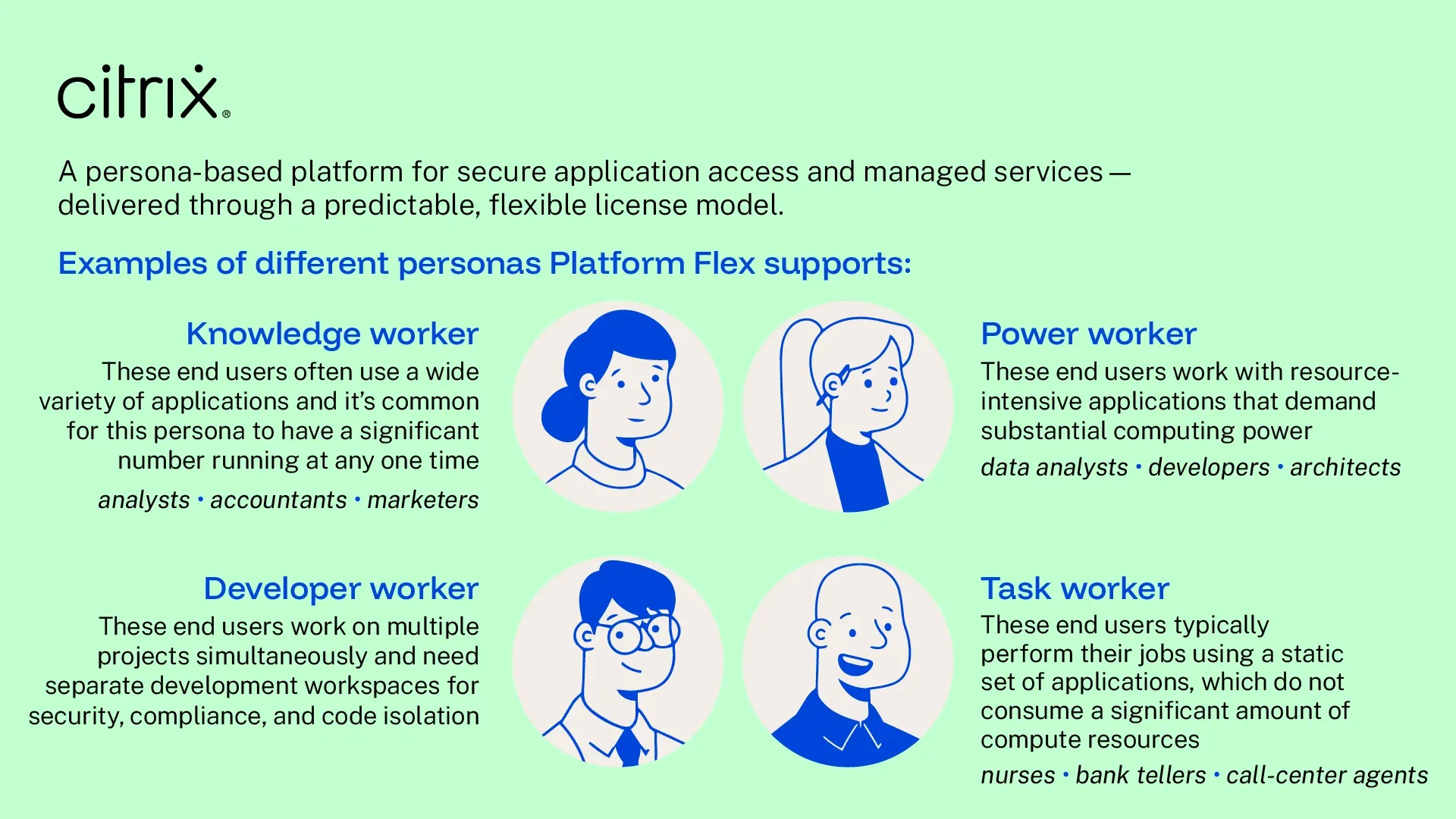
Modern IT faces squeezed budgets, fragmented tools, and demands for resilience amid hybrid environments. Citrix Platform Flex tackles this by grouping users into personas with shared needs, right-sizing desktops, apps, and security.
For instance, knowledge workers get basic SaaS access, while high-stakes roles like securities traders demand millisecond latency. Flex credits act as a consumption pool: buy once, apply as needed—ramping up for tax season or contractor surges, then scaling back. This avoids rigid per-user pricing that ignores variable demand.
IDC analyst Filippo Vanara notes CIOs seek such models to "align resources to real workforce requirements while optimizing costs." Citrix co-president Hector Lima echoes this, positioning it as a response to customer feedback on adaptability.
Azure Foundation Enables Scalable Operations
Platform Flex runs natively on Azure across 10+ regions, leveraging its compute, networking, storage, identity, data, and AI services. This supports rapid VM orchestration—starting or deallocating thousands in minutes—for seasonal spikes.
Azure's AI ops monitor workloads, spot anomalies, and streamline incident response. Eligible usage counts toward Azure Consumption Commitments, easing multi-cloud budgeting. Microsoft’s Jessica Hawk highlights how this combo delivers "scale, resilience, and intelligence" for shifting workforces.
For tech teams, this means less custom scripting: Citrix manages the DaaS infrastructure, unifying delivery across models while preserving control.
Initial Rollout: DaaS Flex and Early Adopters
Citrix DaaS Flex launches first, offering persona-optimized virtual desktops on a flat-rate, per-user basis. It simplifies ops by handling cloud infrastructure, reducing environment fragmentation.
Salling Group, Denmark’s largest retailer with 2,100 stores, deploys it for dynamic staffing. IT manager Ramus Poulsen says it matches "secure access to different worker types and align[s] costs with real usage," avoiding overprovisioning during peaks like store openings.
Other early users span financial services, healthcare, telecom, retail, and entertainment. Expansions to more services follow in coming months.
Implications for Tech Leaders
Enterprise buyers gain flexibility but must audit workforces to define personas accurately—mismatches could inflate credits or underdeliver. Integration with Azure suits Microsoft-centric stacks, but assess lock-in risks versus on-premises Citrix holdouts.
Security benefits from zero-trust access and enterprise browser options, critical for CISOs amid AI-driven threats. Ops teams benefit from automated scaling, freeing bandwidth for strategic AI pilots. Vendors like Citrix reposition from legacy VDI to consumption-based DaaS, pressuring rivals to match.
Watch for total cost of ownership: Flex credits promise predictability, but track consumption patterns post-deployment.
Key Takeaways
- Flexible Credits: Purchase a pool and allocate to personas, scaling desktops/security dynamically without per-user lock-in.
- Azure-Native Build: Supports 10+ regions with AI ops for anomaly detection and rapid VM scaling, counting toward Azure commitments.
- Persona Matching: Tailors resources—e.g., low-latency for traders, basic SaaS for knowledge workers—reducing overprovisioning.
- Early Proof: Salling Group uses DaaS Flex for 2,100 stores, aligning costs to retail peaks.
- Starting Point: Available now with DaaS Flex; broader services incoming.
TechInsyte's Take
Citrix Platform Flex equips tech leaders to match IT delivery to workforce realities, potentially cutting waste in hybrid/AI eras. Early adopters like Salling Group validate its fit for variable demand, but ROI depends on precise persona mapping and Azure alignment. Monitor credit efficiency and integration friction as deployments scale—decisive moves here could redefine secure access economics.
Source: Businesswire