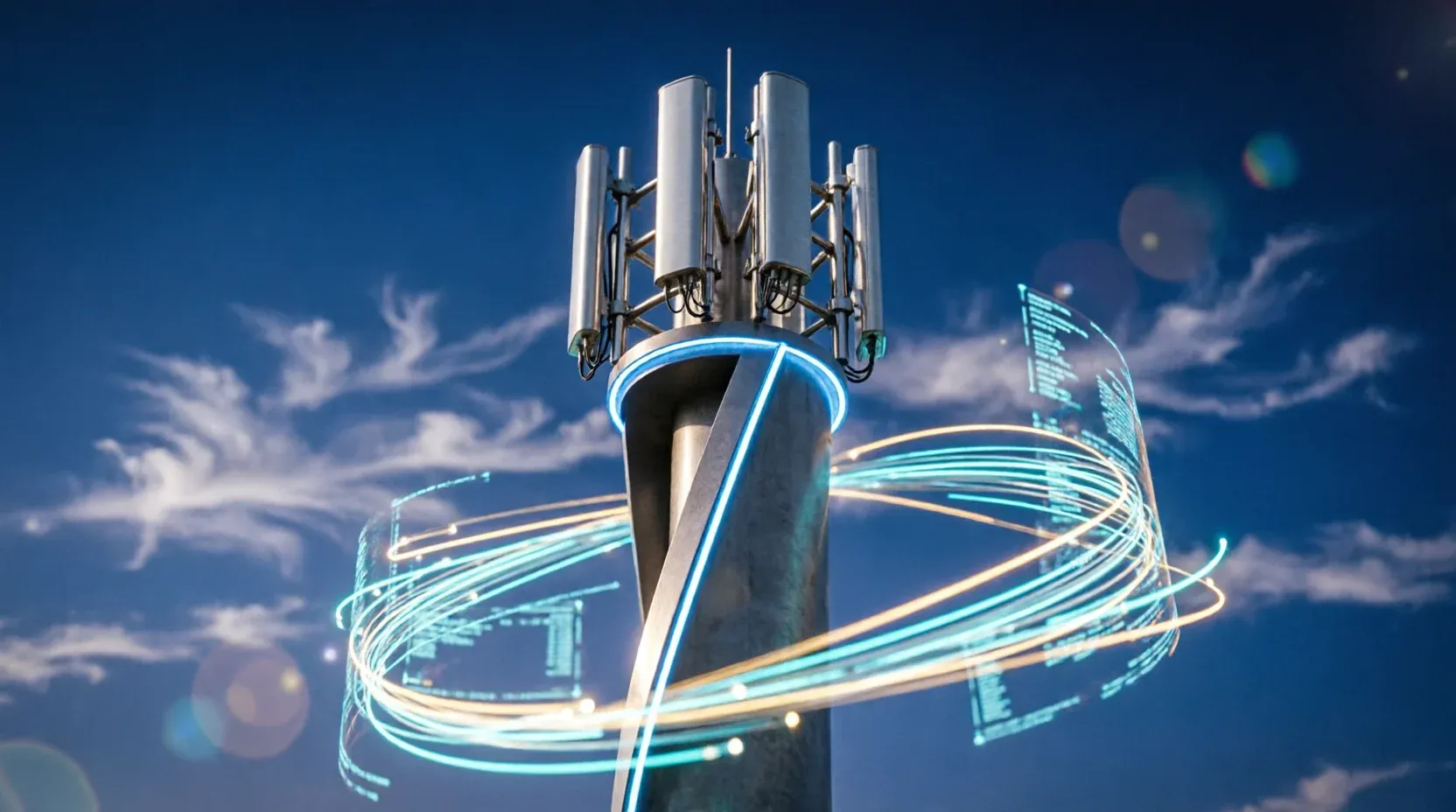
Castanet Corporation and Rypplzz are attempting to transform traditional television broadcast infrastructure into a high-precision, location-aware digital network designed to support the growing requirements of physical AI. By embedding Rypplzz’s spatial intelligence into Castanet’s hybrid ATSC 3.0 and 5G Broadcast Internet architecture, the companies aim to deliver three-axis (X, Y, Z) Position, Navigation, and Timing (PNT) performance. This strategic move targets the limitations of current GNSS-based systems, positioning the combined network as a resilient alternative for environments where satellite signals are often degraded or obstructed. The partnership seeks to leverage high-power UHF spectrum to provide ultra-reliable nanosecond timing and precise 3D positioning, effectively turning broadcast towers into a distributed layer of spatial infrastructure for enterprise and industrial applications.
Integrating Spatial Intelligence into ATSC 3.0 Infrastructure
The collaboration centers on a software-defined architecture that integrates Rypplzz’s spatial engine directly into Castanet’s wide-area 5G Broadcast Internet network. Rather than deploying a separate, parallel positioning network, the Rypplzz platform is designed to ingest and process native data from the Castanet network. This includes 5G Broadcast Positioning Reference Signals (PRS), Downlink Time Difference of Arrival (DL-TDOA) measurements, and Single Frequency Network (SFN) synchronization states. By normalizing these data streams alongside transmitter geometry and receiver observations, the system intends to provide highly reliable 3D spatial positioning for both indoor and outdoor environments.
Initial pilot deployments are scheduled to launch within Castanet networks located in Las Vegas and Silicon Valley. These pilots will test the integration of Rypplzz’s technology with the 3GPP Release 18 standard for 5G Broadcast, merging high-power UHF spectrum with a hardware-agnostic spatial intelligence layer. The companies are positioning this hybrid approach—combining broadcast spectrum with modern IP and wireless technologies—as a cost-effective method to scale nationwide. The goal is to enable businesses, venues, and media operators to access precise three-axis location data, which the companies suggest will fuel end-user applications for sensor fusion and physical AI.
Targeting Resilient PNT for Critical Infrastructure
The partnership identifies several high-value market segments where traditional positioning may fail, specifically focusing on "urban canyons," indoor environments, and GNSS-degraded areas. By providing a ground-based, terrestrial PNT alternative, the companies aim to offer a secure foundation for industries requiring trusted timing and coordination. This includes defense and national resilience sectors, where the network could potentially safeguard critical government infrastructure, power grids, and transportation systems. For public safety and emergency response, the technology is intended to enable precise horizontal and vertical tracking within complex, multi-story buildings.
Beyond positioning, the architecture is designed to address network congestion by enabling 5G Broadcast and network offload. This allows high-demand media and data traffic to be moved from congested unicast cellular networks onto the more efficient one-to-all broadcast layer. For the emerging physical AI economy, the companies suggest this infrastructure will provide the real-time spatial foundation necessary for robotics and autonomous systems. By delivering precise "where and when" data for devices and assets in 3D space, the partnership is attempting to establish a new category of secure, robust PNT infrastructure capable of supporting data centers, military operations, and next-generation digital services.
Key Takeaways
- Castanet and Rypplzz are launching pilot deployments in Las Vegas and Silicon Valley to test 3D (X, Y, Z) positioning via 5G Broadcast.
- The technology utilizes the 3GPP Release 18 standard to merge high-power UHF spectrum with a software-defined spatial intelligence platform.
- The system is designed to provide an alternative to GNSS in obstructed environments, such as urban canyons and multi-story buildings.
TechInsyte's Take
In our view, this partnership represents a calculated attempt to repurpose underutilized broadcast spectrum to solve the "last mile" problem of spatial intelligence. While most enterprise focus remains on satellite-based positioning, the inherent vulnerabilities of GNSS in dense urban or indoor environments create a significant opening for terrestrial-based PNT. By utilizing the ATSC 3.0 and 5G Broadcast standards, Castanet is not just delivering content; they are attempting to turn a legacy distribution medium into a high-precision sensor network. This signals a broader trend where digital infrastructure must move beyond simple connectivity to provide deep, contextual data—specifically spatial and temporal awareness. If the pilots in Las Vegas and Silicon Valley successfully demonstrate nanosecond timing and reliable 3D positioning, this could establish a new, highly resilient layer of the telecommunications stack for the physical AI era.
Questions & Answers
How does the Rypplzz platform achieve 3D positioning without a separate network?
The Rypplzz platform uses a software-defined architecture that processes native data already present in the Castanet network. This includes 5G Broadcast Positioning Reference Signals (PRS), Downlink Time Difference of Arrival (DL-TDOA), and Single Frequency Network (SFN) synchronization states, allowing it to calculate X, Y, and Z coordinates using existing broadcast signals.
What specific environments is this technology intended to serve?
The technology is positioned to serve environments where traditional GNSS (satellite) signals are unreliable, specifically urban canyons, indoor locations, and obstructed environments. It is also intended for complex, multi-story buildings where vertical (3D) location tracking is required for public safety.
What are the primary industrial applications for this 5G Broadcast PNT infrastructure?
The companies have identified several key markets: physical AI and autonomous systems (robotics), defense and national resilience (protecting power grids and utilities), public safety (emergency response tracking), and network operators (offloading high-demand traffic from unicast cellular networks).
Which technical standards govern this new deployment?
The partnership operates under the 3GPP Release 18 standard for 5G Broadcast, integrating this with Castanet’s hybrid ATSC 3.0 and 5G Broadcast Internet architecture.
Source: Businesswire