
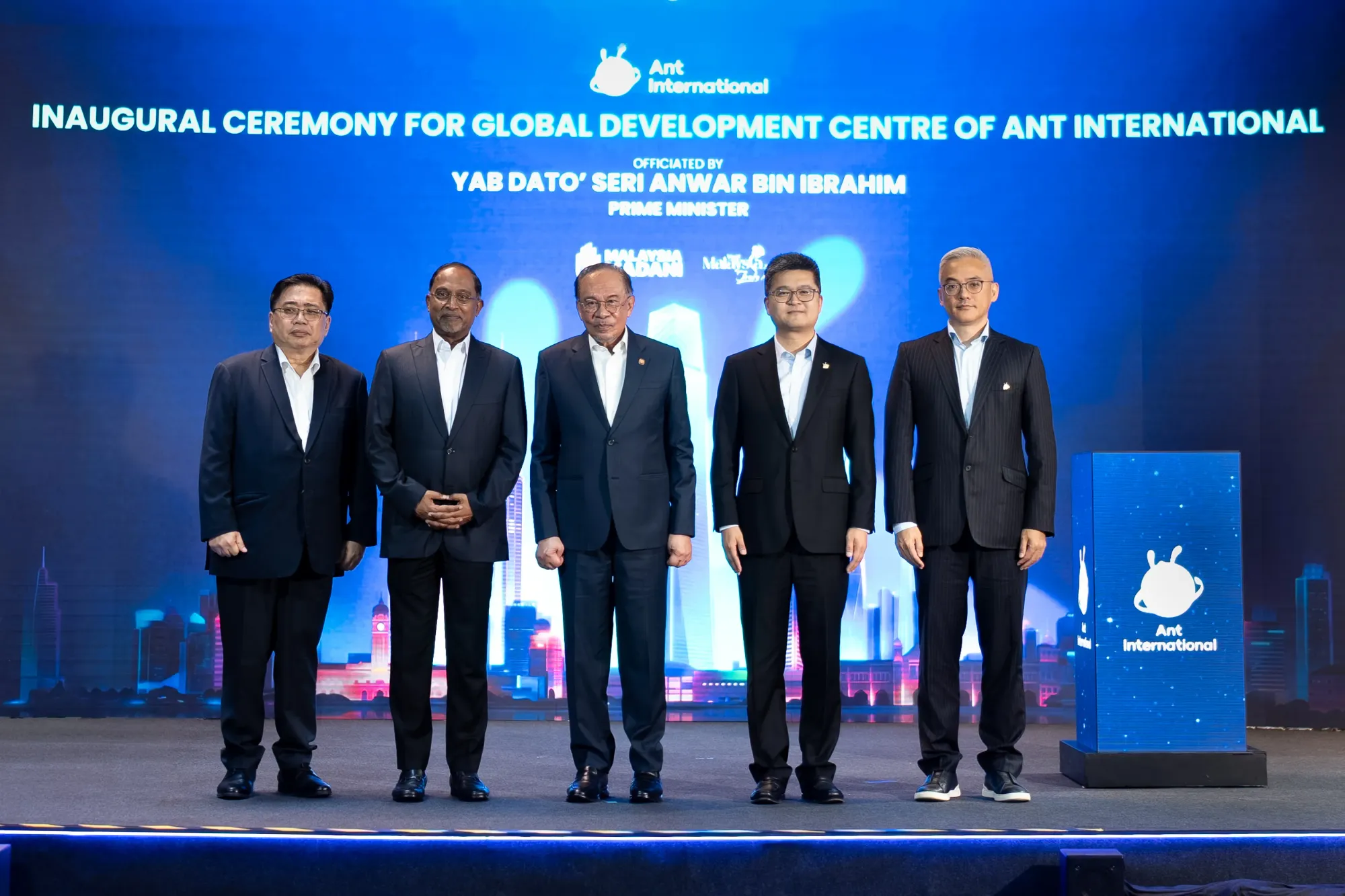
Ant International officially opened its Global Development Centre (GDC) in Kuala Lumpur on 1 July 2026, marking a significant milestone in the company’s long‑term strategy to anchor AI, fintech and digital‑payment innovation in Southeast Asia. The inauguration ceremony was officiated by Malaysia’s Prime Minister YAB Dato' Seri Anwar Ibrahim, underscoring the high‑level governmental support for the project. By situating the GDC in the heart of the Tun Razak Exchange (TRX) financial district, Ant signals its confidence that Kuala Lumpur can serve as a regional hub for next‑generation technology, talent development, and cross‑border commerce. The centre aligns with Malaysia’s AI Nation 2030 agenda and the broader national push toward a digital economy, offering a concrete pathway for local graduates to work on global‑scale AI and fintech solutions.
Ant International launches Global Development Centre in Malaysia
The GDC occupies premium office space at The Exchange 106 within TRX, Malaysia’s dedicated international financial centre. Ant International projects that the centre will eventually host around 1,500 employees, with more than half occupying technology‑related roles such as AI engineering, data science, and product development. A distinctive feature of the talent mix is that roughly 50 % of the tech staff are recent graduates drawn from over 30 Malaysian universities, reflecting deep collaboration with the Malaysia Digital Economy Corporation (MDEC) and the Ministry of Higher Education. These partnerships include hackathons, specialised training programmes, and curated curricula designed to fast‑track “FinAI” talent.
CEO Cyril Han of Ant Group highlighted the strategic timing: “In the next 6 to 12 months, the agentic AI revolution will be in full swing… Ant has many deep and long‑term partnerships in Malaysia and the region.” Ant International CEO Peng Yang linked the centre to the firm’s “6T” sustainable development strategy—facilitating travel, trade, growth, technology, talent and trust—mirroring Malaysia’s own digital‑transformation goals. The GDC therefore serves not only as an employment generator but also as a catalyst for building world‑class AI and fintech capabilities that can be exported globally.
Technical ecosystem: AI‑as‑a‑Service and payment integration
Ant International’s technical footprint in Malaysia is anchored by the EPOS360 AI‑as‑a‑Service platform, launched in January 2026 in partnership with TNG Digital. EPOS360 aggregates point‑of‑sale, payments, banking, credit financing and growth tools, and now serves over 14,000 Malaysian SMEs. The platform leverages Ant’s AI suite—including the GenAI Cockpit and AI travel agent—to deliver intelligent, data‑driven services that help merchants optimise inventory, pricing and customer engagement.
Through its unified wallet gateway Alipay+, Ant connects international travellers to Malaysian merchants via the national QR system DuitNow. In the first half of 2026, more than 600,000 merchants—predominantly SMEs—received payments from Alipay+ partners, representing a year‑on‑year increase of over 70 %. Correspondingly, traveller spending via DuitNow rose more than 60 %, with Alipay+ accounting for the largest share of inbound QR transactions. A forthcoming partnership with PayNet will enable Malaysian payment apps to accept payments at over 150 million merchants in more than 220 markets, dramatically expanding the reach of local businesses.
Ant’s merchant solutions, Antom and 2C2P, have expanded the digital merchant base by nearly 60 % and processed more than 50 % more transactions year‑on‑year. The company now supports 300 + payment methods across 220 + markets, encompassing all major card schemes, 50 mobile‑payment partners, and over 10 national QR systems, reinforcing Malaysia’s position in the global payments ecosystem.
Enterprise impact on Malaysian SMEs and cross‑border finance
The GDC’s talent focus and technology stack are designed to deepen Ant International’s support for Malaysian small and medium‑size enterprises. Beyond EPOS360, Ant’s WorldFirst service obtained in‑principle approval from Bank Negara Malaysia in 2025 to operate as a Class A Money Services Business, paving the way for cross‑border collections, payments and currency exchange for Malaysian firms expanding overseas.
Through its Bettr platform, Ant is extending inclusive financial services to gig workers and micro‑enterprises. In 2026, Bettr partnered with Muslim Pro to deliver Shariah‑compliant financial products, with oversight from Masryef Advisory and SEDANIA As‑Salam Capital, ensuring alignment with Islamic finance principles.
Enterprise customers are already reporting measurable benefits. AirAsia, leveraging Ant’s open‑source AI FX model, reduced foreign‑exchange‑related costs by 40 %. Ant is also exploring tokenised deposits and treasury solutions with CIMB, aimed at improving cross‑border payment efficiency and liquidity management—key components of Malaysia’s ambition to become a global payments and treasury hub.
Key Takeaways
- Ant International’s Global Development Centre in Kuala Lumpur will employ about 1,500 staff, with over 50 % in technology roles, and is situated at The Exchange 106 in TRX.
- The EPOS360 AI‑as‑a‑Service platform, launched in January 2026, now supports more than 14,000 Malaysian SMEs, integrating POS, payments, banking and credit tools.
- Payments via Alipay+ and the DuitNow QR system grew more than 60 % in the first half of 2026, with merchant participation up over 70 % year‑on‑year.
TechInsyte's Take
Ant International’s GDC signals a concrete commitment to building AI and fintech capabilities in Southeast Asia, leveraging local talent to serve both domestic SMEs and global merchants. While the centre expands the talent pool and technical infrastructure, the ultimate impact on cross‑border payment volumes and AI adoption will depend on how quickly partners integrate Ant’s suite of services and on regulatory developments around digital finance. CIOs and fintech leaders should monitor Ant’s rollout of tokenised deposits and the scaling of EPOS360, as these could shape the next wave of digital‑payment interoperability for Malaysian enterprises.
Source: Businesswire