
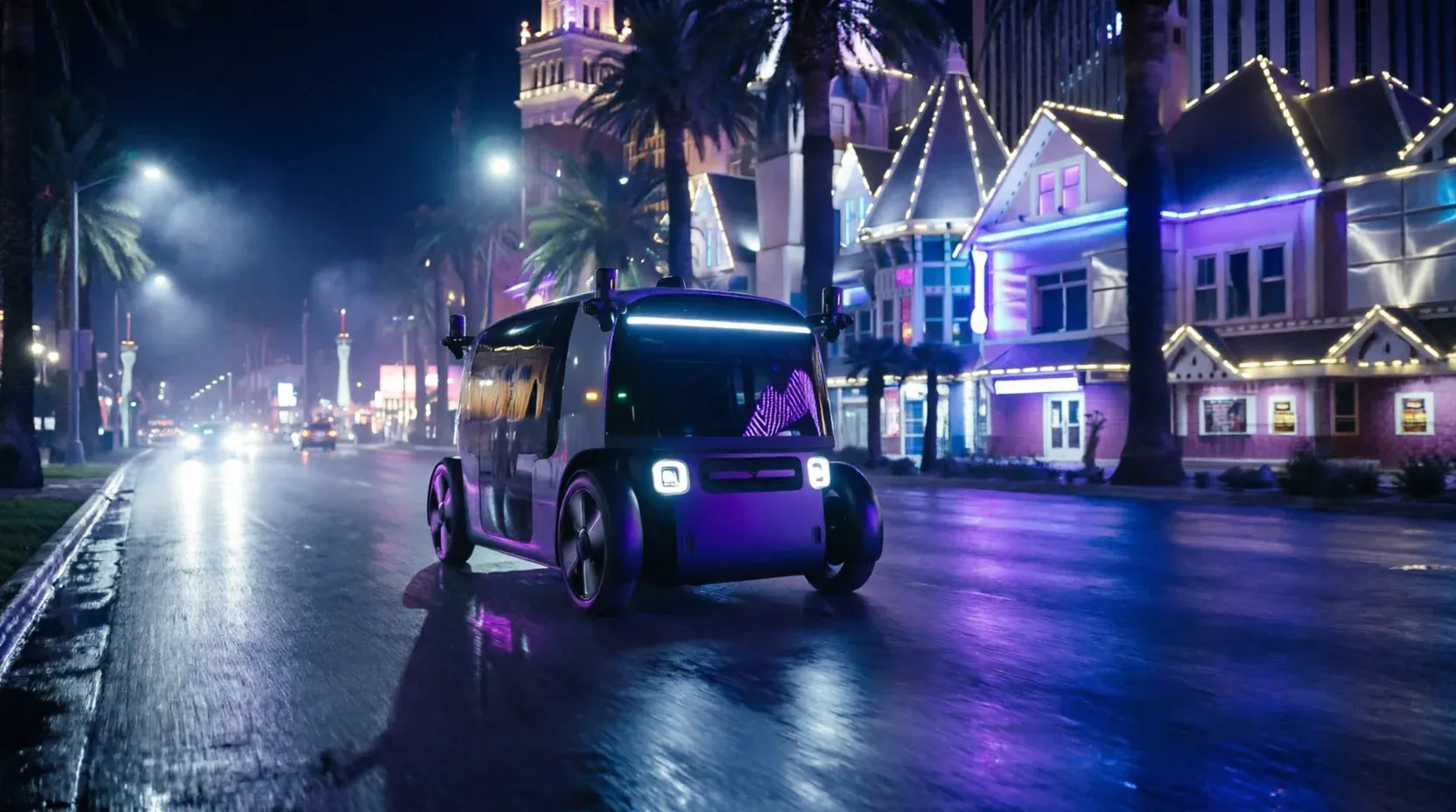
Amazon-owned Zoox is transitioning from free testing to commercial operations, announcing it will begin charging for paid robotaxi rides in Las Vegas starting next week. This move follows a significant regulatory milestone from the National Highway Traffic Safety Administration (NHTSA), which granted the company an exemption to deploy vehicles without human controls. This shift marks a critical step in the commercialization of autonomous ride-hailing technology.
NHTSA Exemption and Las Vegas Commercial Launch
The commercial rollout in Las Vegas begins this coming Monday, following recent approval from the NHTSA. Zoox secured a unique exemption from federal rules requiring human controls, making it the first autonomous ride-hailing company to achieve this for a vehicle built from the ground up. However, this regulatory clearance is not unlimited; the NHTSA has capped the exemption at 2,500 vehicles for each of the next two years. While the agency determined the vehicle is as safe as those meeting standard federal motor vehicle safety requirements, it has imposed strict additional reporting mandates. Zoox must now report specific incidents, including crashes or instances where vehicles stop inappropriately on public roads, to maintain compliance during this expansion phase.
Zoox Pricing Model and Vehicle Specifications
Zoox’s electric, carriage-style vehicles feature a unique interior design with two rows of inward-facing seats. For the Las Vegas launch, the company is positioning its service within the "comfort" tier of the ride-hailing market. This tier typically commands fares 20% to 40% higher than standard services by offering newer, roomier vehicles. The pricing structure will utilize a base fare combined with a time and distance model based on the optimal route. To ensure transparency for users, any destination-specific fees, such as those for airport trips, will be disclosed upfront. Notably, passengers will not be charged extra if the robotaxi takes a longer route than originally planned. While testing has occurred in San Francisco, Austin, and Miami, Zoox has not disclosed a timeline for paid services in those cities.
Key Takeaways
- Zoox will begin charging for paid rides in Las Vegas starting next Monday.
- The NHTSA granted Zoox an exemption for up to 2,500 vehicles per year for the next two years.
- Pricing will follow a "comfort" tier model, typically 20%-40% higher than standard ride-hailing.
TechInsyte's Take
In our view, Zoox’s move into paid service signals a shift from pure R&D to market-entry competition against Alphabet’s Waymo and Tesla. By securing a ground-up vehicle exemption, Zoox is bypassing the limitations of modified conventional cars, yet the 2,500-vehicle cap suggests a controlled, incremental scaling strategy. The requirement for enhanced safety reporting and the history of software recalls, such as the July smoke detection issue, indicate that regulatory scrutiny remains the primary bottleneck for autonomous infrastructure scaling.
Questions & Answers
How does Zoox's regulatory status differ from traditional vehicle manufacturers?
Unlike companies modifying existing cars, Zoox received a specific NHTSA exemption to operate vehicles designed without human controls, though this is limited to 2,500 units annually for two years.
What is the strategic pricing positioning for the Las Vegas launch?
Zoox is targeting the "comfort" tier, which utilizes its unique inward-facing seat design to justify fares 20% to 40% higher than standard ride-hailing services.
What operational risks must Zoox manage under new NHTSA mandates?
Zoox must adhere to heightened reporting requirements for safety incidents, including crashes or inappropriate stopping, following the NHTSA's determination of safety equivalence.
How does the Zoox fare model protect the consumer experience?
The model uses a base fare plus time and distance, ensuring riders are not penalized with higher costs if the vehicle takes a longer route than planned.
Source: REUTERS