


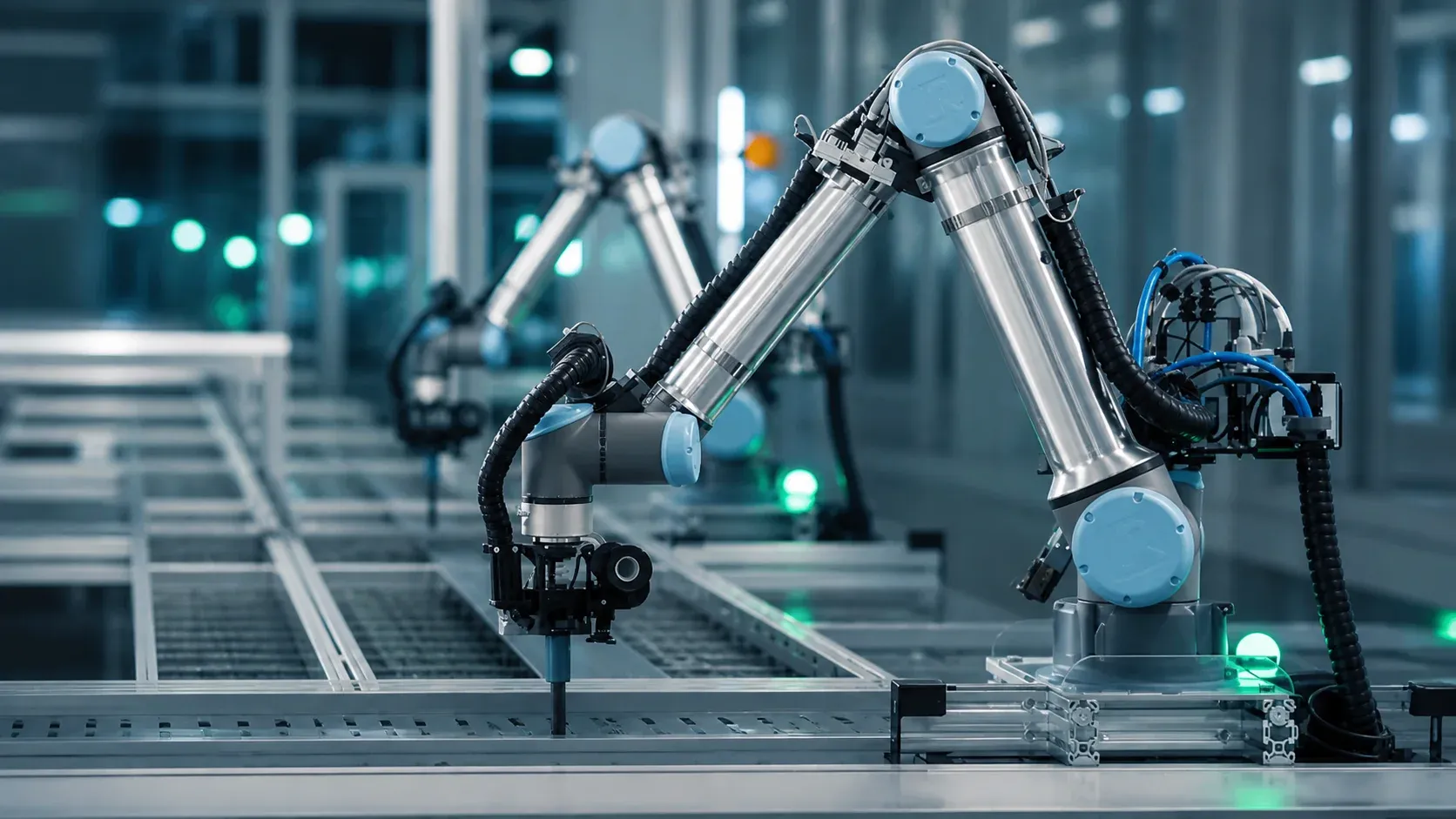
Warehouse automation is entering a new stage. The first wave was about machines helping people move goods faster. The next wave is about AI coordinating robots, software, workers, inventory, and fulfillment flows as one intelligent system.
Gartner predicted in April 2026 that by 2030, 50% of new warehouses in developed markets will be robot-centric facilities, with humans becoming optional in many workload-handling functions. The firm said rising labor costs, lower willingness to perform repetitive physical work, and the maturity of AI-enabled robotics are pushing warehouse design away from human-first layouts toward robot-first operations.
For B2B logistics, retail, manufacturing, and e-commerce leaders, this is not a distant robotics fantasy. It is the next operating model for fulfillment.
Warehouses Are Becoming Software-Defined Physical Systems
A modern warehouse is no longer just racks, forklifts, scanners, and conveyors. It is becoming a software-defined physical system.
AI can help decide where goods should be stored, which robot should move which item, how picking routes should change in real time, when inventory needs replenishment, and how to balance speed with worker safety. Robotics handles the movement. Warehouse management software handles orchestration. AI adds prediction and optimization.
Gartner’s forecast points to a major design shift: future warehouses will be built around robots from the beginning, rather than retrofitting robots into human-first facilities.
That changes everything from floor layout to safety systems, connectivity, charging infrastructure, inventory strategy, and labor planning.
Amazon Shows the Scale of Industrial Robotics
Amazon is the clearest large-scale example of warehouse robotics in action.
Amazon announced in 2025 that it had deployed its 1 millionth robot and launched DeepFleet, an AI foundation model designed to improve the movement of its robotic fleet. Amazon said DeepFleet helps its robots move more efficiently across fulfillment centers, supporting faster and lower-cost deliveries.
While that milestone came before 2026, it matters because it shows the scale now shaping the 2026 warehouse automation market. Amazon’s fulfillment network is effectively a live laboratory for how robotics, AI, inventory, and workers can operate together at industrial scale.
Amazon also describes a range of fulfillment-center robots used to sort, lift, and carry packages, showing that warehouse robotics is no longer one machine doing one task. It is an ecosystem of specialized robots working across different points in the fulfillment process.
AI Makes Robots More Valuable
The most important change is not just that warehouses have more robots. It is that robots are becoming more coordinated.
A mobile robot can move inventory. A robotic arm can pick items. A machine-vision system can inspect quality. But AI can connect those capabilities into a smarter workflow.
That matters because warehouse demand is unpredictable. Order volumes change. Labor availability shifts. Returns rise. Promotions spike demand. Supply chains delay inventory. Robots need to adapt to changing conditions rather than operate only through fixed paths.
AI helps solve that by improving routing, prioritization, exception handling, and operational visibility.
Machine Vision Expands the Automation Layer
Warehouse automation is also converging with AI-powered machine vision.
Zebra Technologies said AI-powered machine vision would be critical in 2026 for real-time quality control, helping manufacturers reduce errors and waste. Zebra also connected adoption to labor shortages and the need for intelligent operations.
This matters for warehouses because vision systems can support scanning, counting, inspection, sorting, damage detection, and safety monitoring. Combined with robotics, machine vision helps physical automation become more flexible.
In simple terms: robots move things, machine vision sees things, AI decides things.
What This Means for B2B Supply Chains
For B2B companies, robot-centric warehousing changes the supply-chain equation.
Companies may gain faster fulfillment, lower error rates, better space utilization, improved worker safety, and more predictable operations. But the shift also raises new requirements.
A robot-centric warehouse needs:
- strong connectivity
- clean inventory data
- warehouse management integration
- robotics maintenance teams
- safety systems
- battery and charging infrastructure
- AI governance
- cybersecurity controls
- change management for workers
- resilient fallback processes
The companies that treat robotics as only a hardware purchase may struggle. The companies that treat robotics as an operating-system transformation will have a better chance of success.
The Labor Story Is More Complicated Than Replacement
Robot-centric warehousing does not simply mean people disappear.
Human roles may shift toward exception handling, maintenance, quality supervision, robot support, inventory problem-solving, safety management, and workflow control. Gartner’s “human optional” language points to a design direction, but not every warehouse will become fully autonomous.
The near-term model is likely hybrid: robots handling repetitive physical work, while humans manage complexity, judgment, repair, and operational exceptions.
That creates a workforce challenge. Companies will need more technicians, robotics coordinators, software-aware operations managers, and data-literate warehouse leaders.
The Business Takeaway
Warehouse automation is moving from robot-assisted operations to robot-centric fulfillment networks.
Gartner’s 2026 forecast shows where new warehouse design is heading. Amazon’s robotics scale shows what large operators are already building. Zebra’s AI and machine-vision trends show how intelligent operations are spreading beyond e-commerce into manufacturing and industrial workflows.
For TechInsyte readers, the key insight is clear: the warehouse is becoming an AI-coordinated machine.
The winners will not simply own more robots. They will build smarter fulfillment systems where software, robotics, workers, data, and infrastructure move together like a very disciplined metal ballet. 🤖
FAQ
What is a robot-centric warehouse?
A robot-centric warehouse is designed around robotic systems from the start, rather than adding robots later to a human-first layout.
Why is AI important in warehouse robotics?
AI helps coordinate robot movement, inventory placement, routing, machine vision, and exception handling across warehouse operations.
What did Gartner predict for warehouse automation?
Gartner predicted that by 2030, 50% of new warehouses in developed markets will be robot-centric facilities.
Source Pack
- Gartner warehouse automation prediction: use for the 2026 forecast that 50% of new warehouses in developed markets will be robot-centric by 2030.
- Amazon Robotics milestone and DeepFleet AI model: use for Amazon’s 1 million robot milestone and its AI foundation model for warehouse movement optimization.
- Amazon fulfillment robotics explainer: use for robot types and practical fulfillment-center use cases.
- Zebra Technologies 2026 industry trends: use for AI-powered machine vision, manufacturing quality control, labor shortages, and intelligent operations.
